Dr Kathy Townsend
‘Revered by Scientists, illustrators provided the detailed scientific record and the first recorded images.’
‘Revered by Scientists, illustrators provided the detailed scientific record and the first recorded images.’
‘Revered by Scientists, illustrators provided the detailed scientific record and the first recorded images.’
‘Revered by Scientists, illustrators provided the detailed scientific record and the first recorded images.’
‘Revered by Scientists, illustrators provided the detailed scientific record and the first recorded images.’
Before Photographers, there were Illustrators
Before Photographers, there were Illustrators
Before Photographers, there were Illustrators
Before Photographers, there were Illustrators
Before Photographers, there were Illustrators
Often thought of as ‘polar opposites’, art and science have more in common than you may think. In both fields, practitioners look at things in a different way. They ask questions, deconstruct ideas and concepts, and then reconstruct them, coming up with something new.
Art has always been incredibly important in advancing science. Before the creation of photography, scientific illustrations were the only way to capture images that were too small, too deep or too far away. When Australia was first explored, by Europeans, it was the scientific illustrators who provided the first images of the unique flora and fauna.
The field of marine biology has depended on scientific drawing perhaps even more than any other. It is only relatively recently that we had access to fully waterproof cameras to capture the underwater world. Images of creatures living at abyssal depths has been restricted further still, due to the engineering challenge presented in creating high quality camera equipment that can withstand crushing pressures.
“Aspects of deep sea biology” and “Ocean Life” are just two of the many books brought to life by British scientific illustrator Olga Marshall. Before the era of photography, Olga used pen and ink and water colours to capture the amazing fish that few people had ever had the privilege to experience.
Science and art are a match made in heaven for the Marshall family. Olga married deep sea biologist Dr Norman Marshall and the influences of science and art created the “perfect storm” in their son, Prof Justin Marshall.
Working out of the University of Queensland, Justin, a world-renowned scientist, is best known for his work on the coloration and vision of marine animals. However, he is also a widely respected artist having won the prestigious L’Oreal award for his exhibit “The Pointillistic Parrotfish”. Using advance macro photography techniques, Justin took stunning, close-up images of coral reef fish. A new appreciation is found in the fin of a wrasse, the tail of a parrot fish, and the body of a leather jacket.
Work from both Olga and Justin were donated by the Marshall family to Moreton Bay Research Station and are on view within the centre.
The tradition of scientific illustration is still alive today. Dr Lindsay Marshall (not related), is both a well-respected research scientist and a scientific illustrator. Her research on identifying fins removed from sharks has been critical in the global fight against illegal shark fishing. Lindsay is also a well-respected scientific illustrator, with her work published in various publications and is commissioned by other marine researchers to create paintings, drawings and line works to illustrate their findings.
Lindsay looks back with nostalgia at those days when scientific illustrators were a critical part of any research expedition. “I would love to go on a research expedition to investigate and document the fauna of a new area – to be the artist on a trip like that,” she says wistfully. “That would be my dream, to sail away on a research boat and just paint and dive.”
I asked Lindsay if she thought that scientific illustration was still relevant in an era when we have access to digital photography. “Absolutely,” said Lindsay, “During the course of my illustration career I have had to re-create images of very rare species, where only one or two bad photographs, or terribly pickled type material, are available. Illustrators can compile a composite drawing, which highlights features that it might take many photographs to accomplish.”
“For a scientist to communicate their findings, they need to be clear and unambiguous,” added Lindsay, “Scientific illustration can help achieve this where words or photographs otherwise cannot.”
Lindsay is currently working on the “Tree of Life Project”, where she is single handedly painting every known shark, ray and chimaeras species in the world. Once she has completed, she will have illustrated somewhere between 1200 to 1500 different species. This will be the first time in over 100 years that a single artist has illustrated an entire faunal group.
Both Olga and Lindsay use their art to depict scientifically accurate details. However, science and art often come together in more relaxed fashion. Worrying less about accuracy and more about aesthetics and communication.
In 2010, Moreton Bay Research Station was fortunate enough to win and Art + Place grant from Arts Queensland. The project grew from a passion about art and culture and its power to communicate a message – in this case, the marine environment and its preservation. Local island artists spent time with scientists discussing the marine environment and the challenges that it faces. Mentored by internationally renowned indigenous artist Judy Watson, four island artists created five new public artworks which are still on display at the research station.
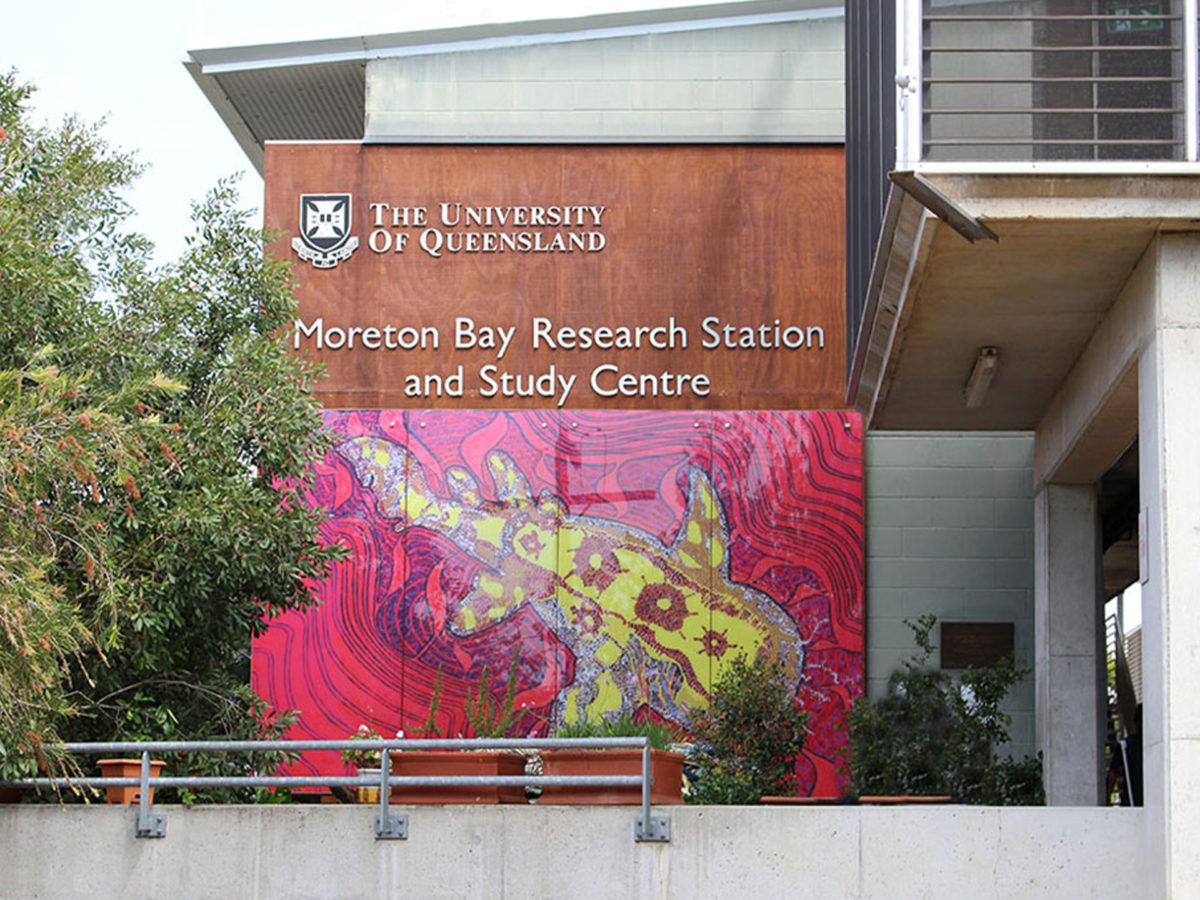
The first artist was Belinda Close, who has lived on Mingerribah (North Stradbroke Island) her entire life and belongs to the Gorenpul, Ngugi and Noonuccal clans of Quandamooka (Moreton Bay). At the time that Belinda visited MBRS, we were holding several wobbegongs, a type of bottom dwelling shark, which reminded her of the stories told by the Elders and her family. Belinda’s spectacular bright red wobbegong and the hammerhead spirit spine were the result. These two large glass installations now greet visitors as they enter the research station.
Hanging from the front of the building, Jennie Truman’s kinetic sculpture was inspired by talking to marine chemist Geoff Nette. Jennie thought it would be a challenge to create a large light-weight structure that would function as a wind vane, but also be an attractive spinning artwork. The sculpture is based on the patterns of the molecular structures that combine to produce saltwater. The cups represent hydrogen and oxygen atoms with the central balls representing chloride and sodium atoms.
Ali Baybrook used her photographic skills as a means of discovering and reflecting on, the many patterns within nature. Through her creation of the “Tide Pool” light boxes, Ali reminds us of the childhood wonders of the kaleidoscope and the many patterns found in nature.
With her installation “Elders in the mangroves” Bernadette Mollison has used her creative work to promote environmental and social justice issues. Highlighting both the fragility and resilience of nature and indigenous culture.
Since the Art + Place grant, MBRS has been privileged to work with many other artist, including Marta Blaszak who donated a four panel, mixed media piece that depicts the common impacts on sea turtles, including entanglement, and ingestion of marine debris. The beauty behind this work is that initially it appears as pleasing paintings of sea turtles, it is not until you look closer that you can see the message hidden in the images.
Impact of marine debris has inspired many artists, including Brisbane’s Jane James. Moreton Bay Research Station is currently displaying the quarter tonne sculpture of a sea eagles nest, created from ghost nets recovered from the shores of far North Queensland. Ghost nets are commercial fishing net that are lost due to misadventure. They are often known as walls of death, for they continue fishing, long after they have become lost, killing thousands of fish, sharks, birds and sea turtles which become entangled in them.
Jane’s sculpture was inspired by observing sea eagle nests in the wild. “When studying sea eagle nests, I would often see rope and netting material incorporated into the natural structure. The irony of the deadly marine debris being incorporated into the life-giving structure of the nest was not lost on me.” The sculpture has spent time in many locations, including Australia Zoo, where the message of the impact of marine debris is being spread.
To see works of art depicted in this article, look for advertised Open Days for the University of Queensland’s Moreton Bay Research Station.
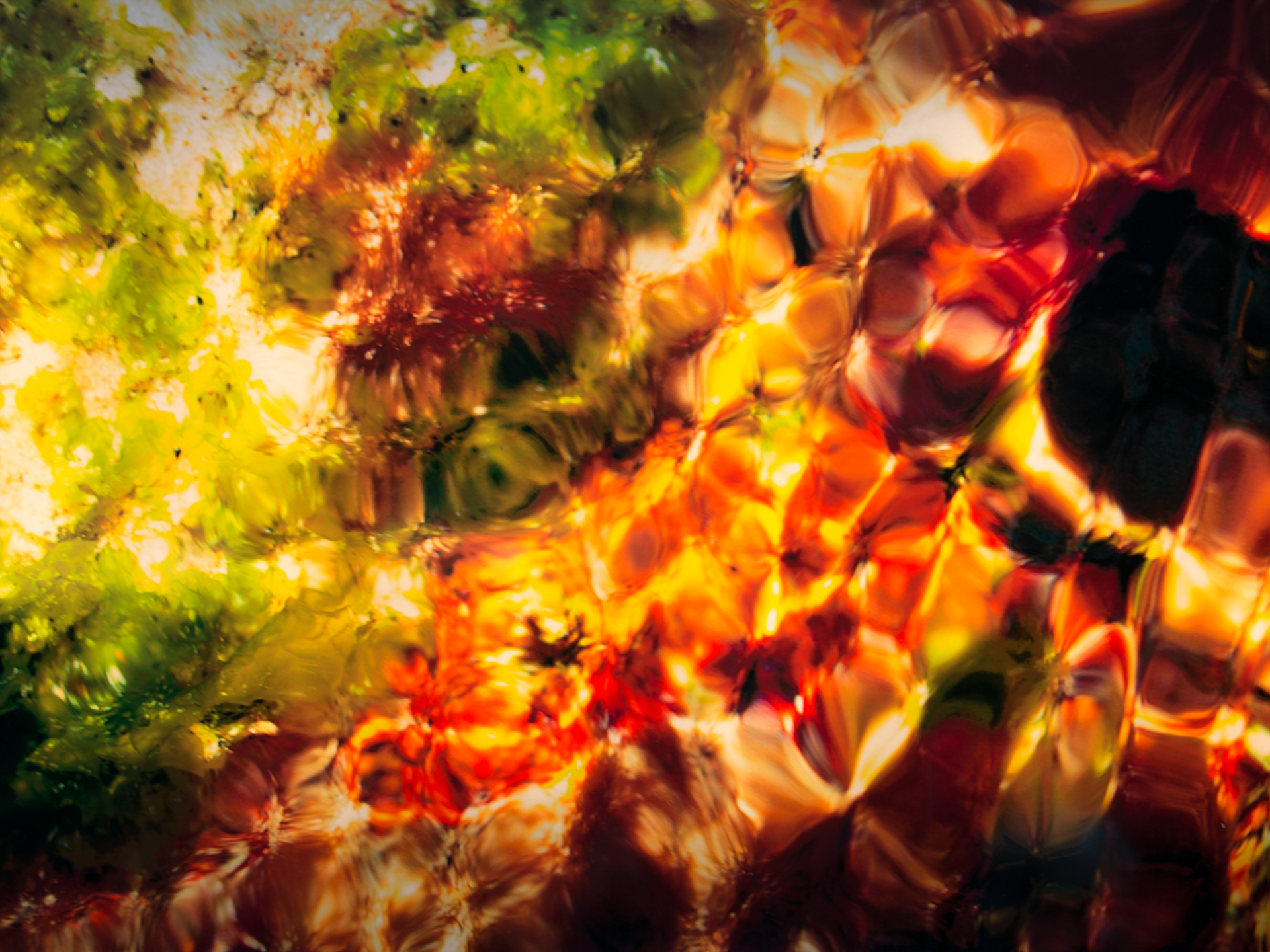
Rockpool Rhythms by Ali Braybrooks
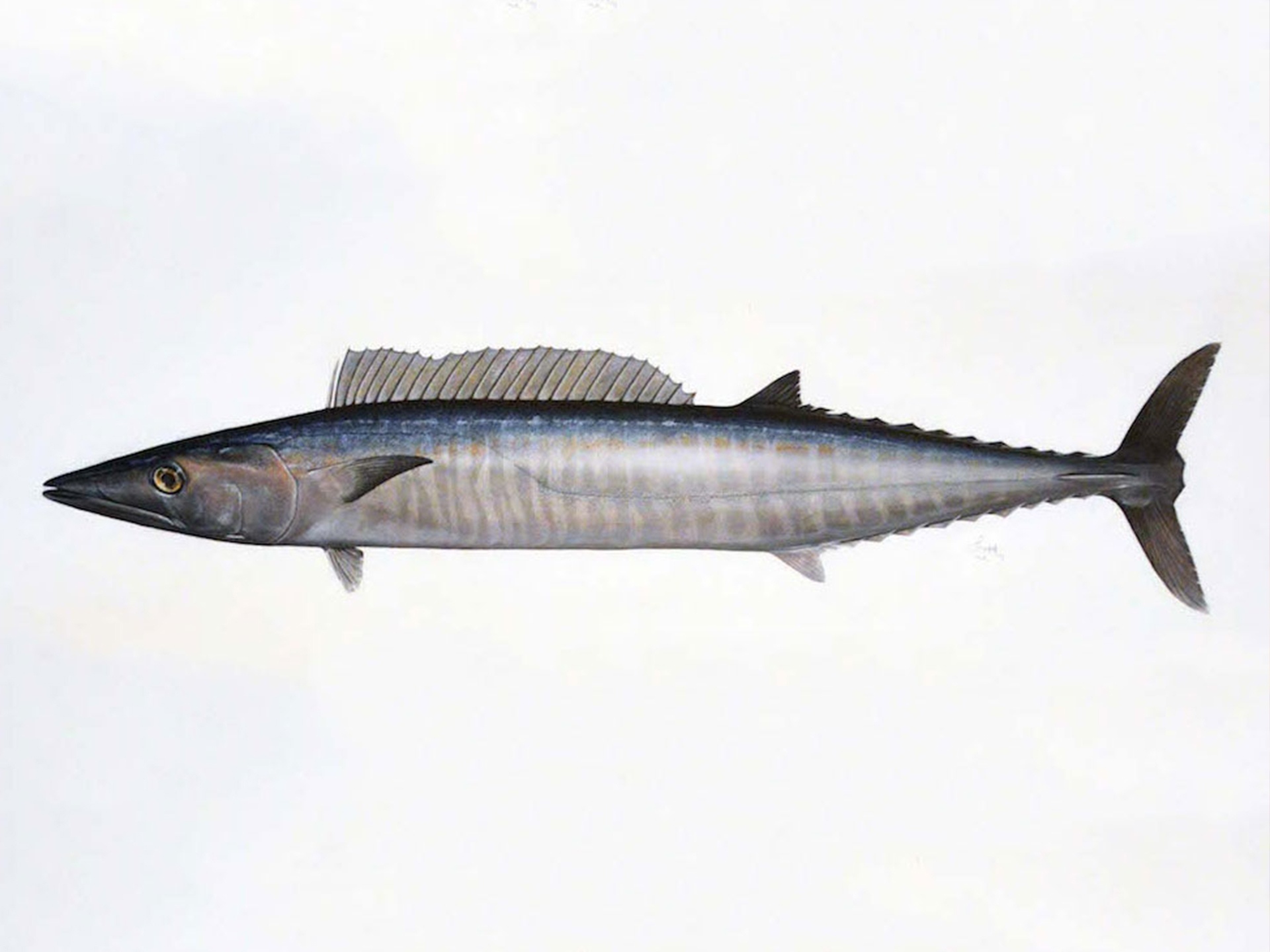
Wahoo by Lindsay Marshall
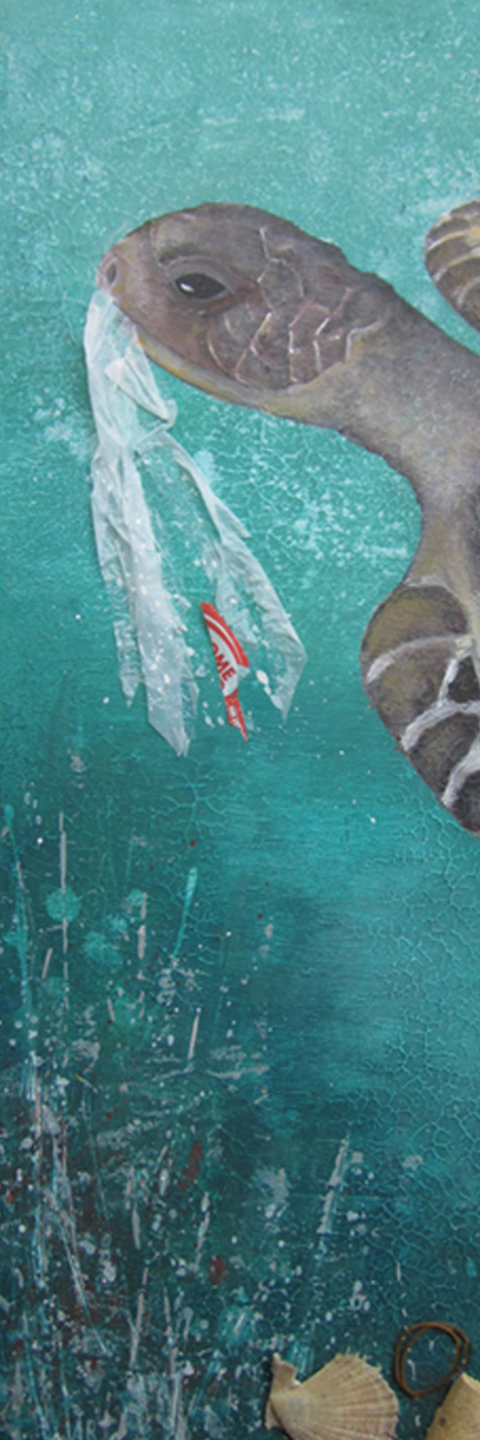
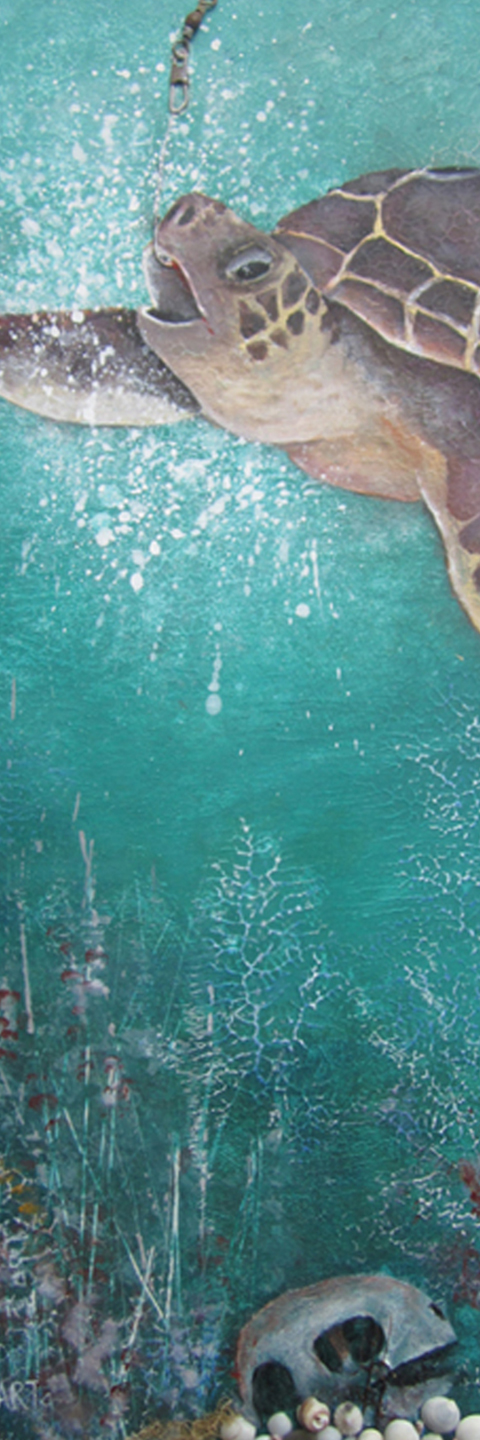
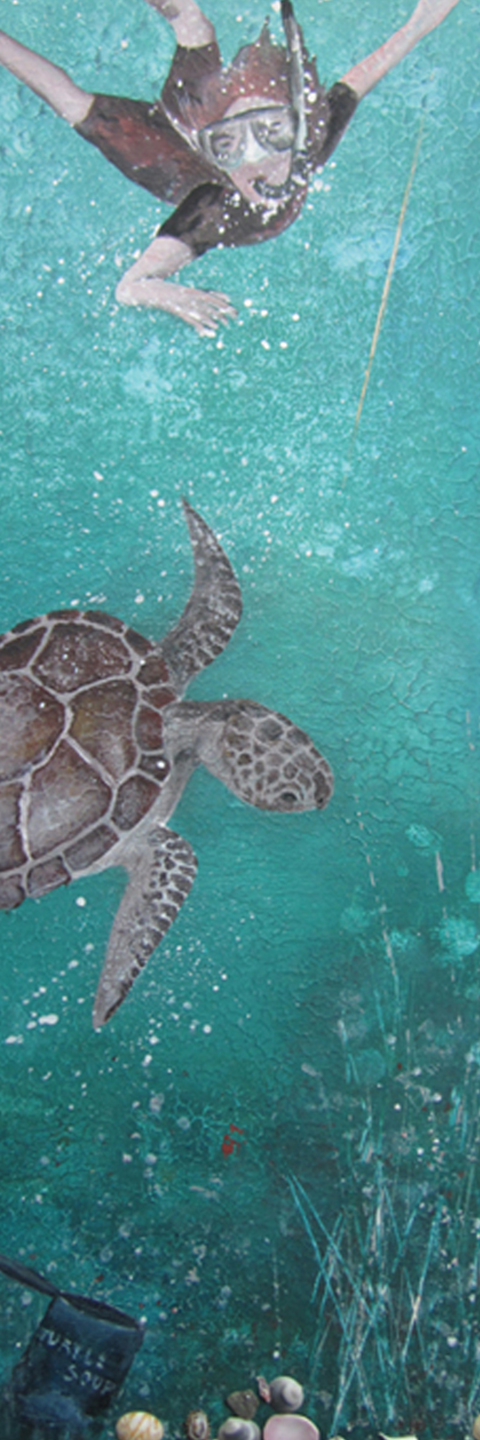
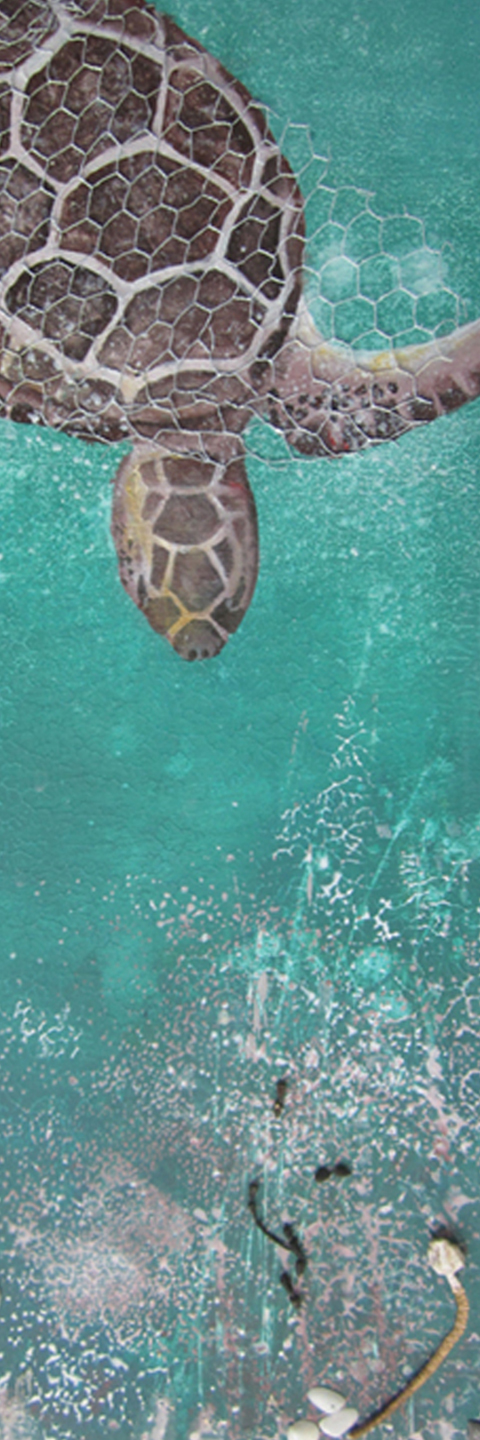
Plight of the Turtle by Marta Blaszak
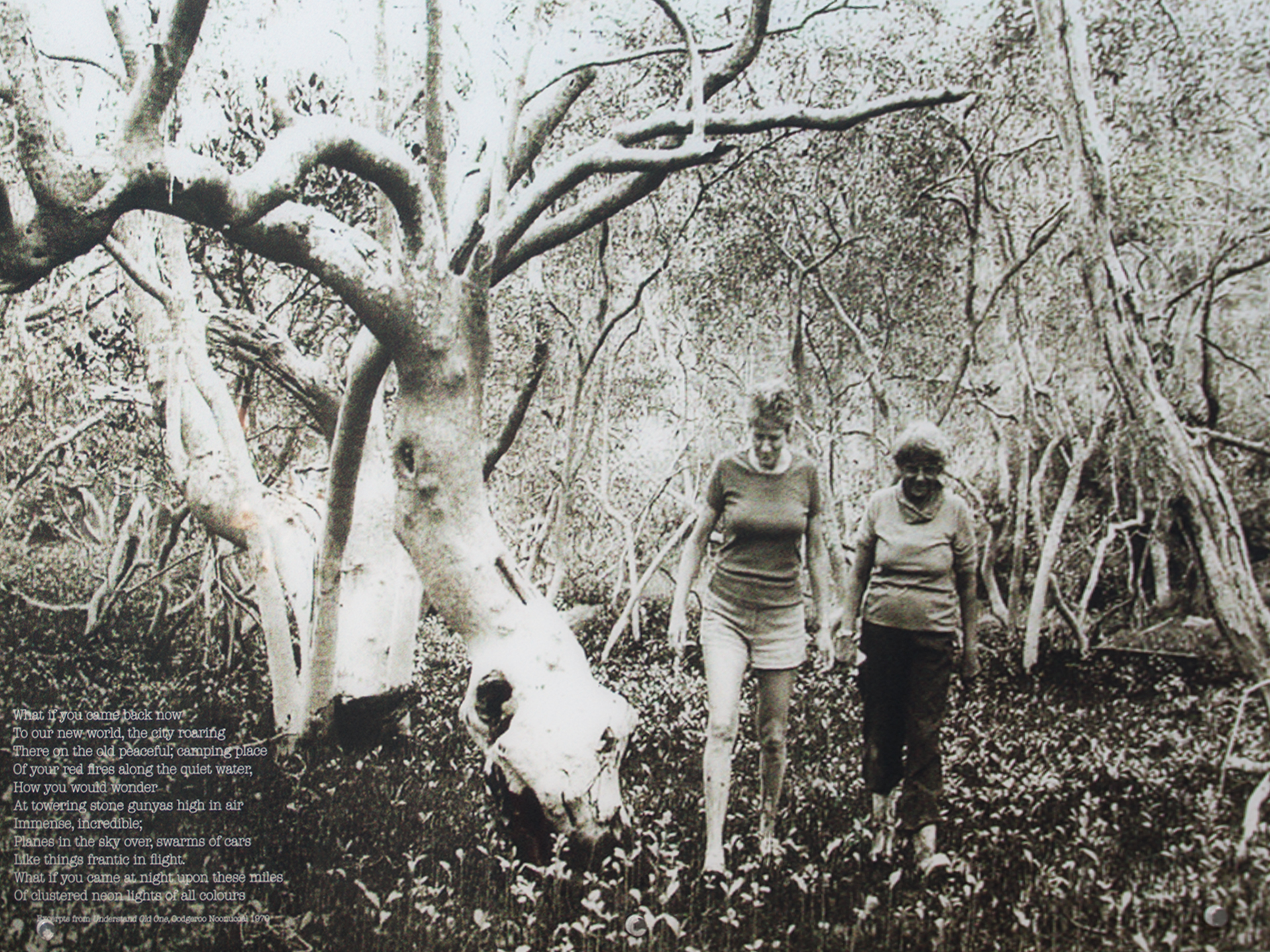
Elders in the Mangroves by Bernadette Mollison
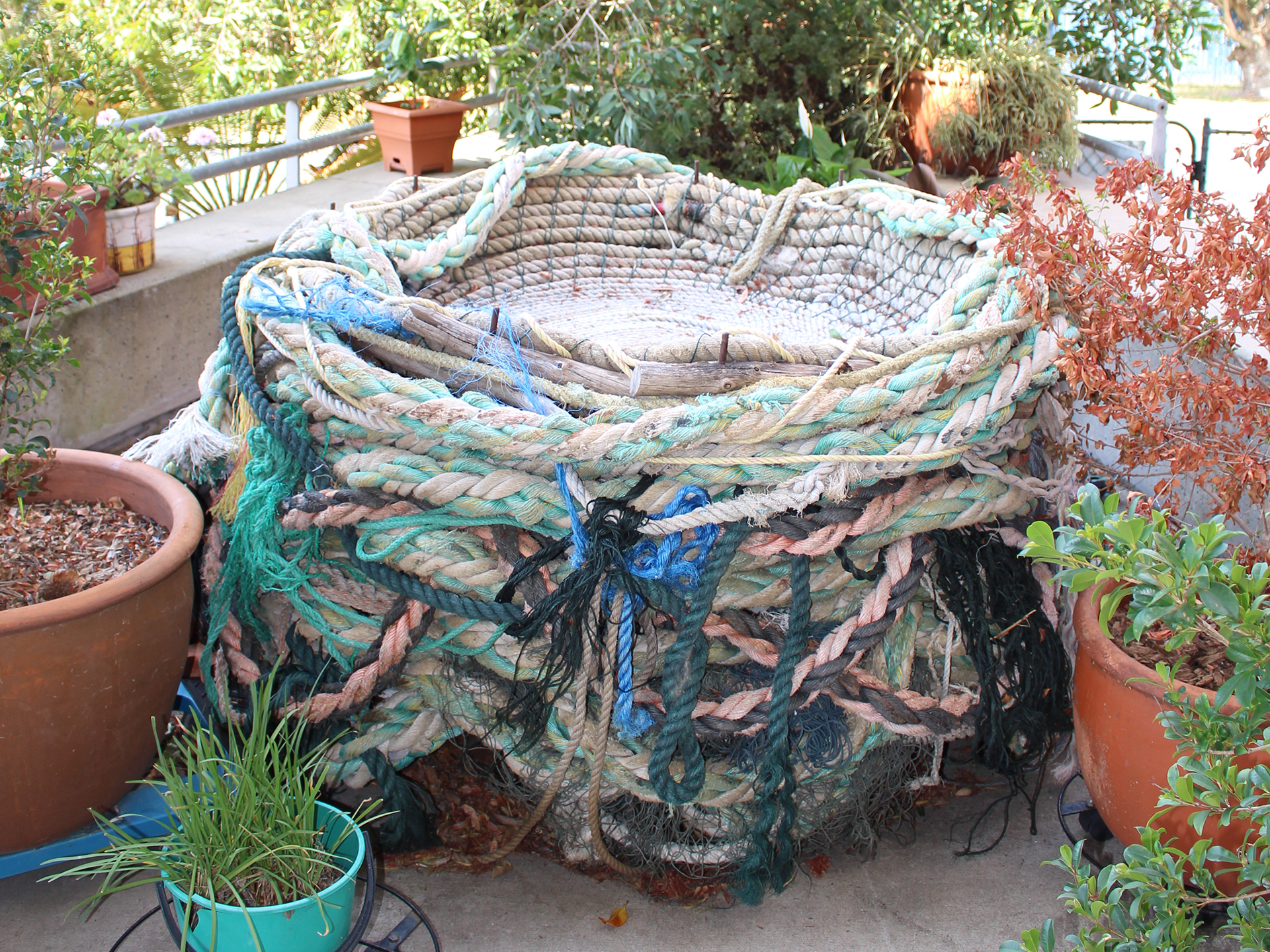
Bird Nest by Jane James