Catherine Heiner
‘Aboriginal people were not permitted to speak their languages under government direction from the 1930s, the grannies would take the children for long walks in the afternoons after school and, in very quiet tones, they would pass on the words for plants and animals in the area.’
‘Aboriginal people were not permitted to speak their languages under government direction from the 1930s, the grannies would take the children for long walks in the afternoons after school and, in very quiet tones, they would pass on the words for plants and animals in the area.’
‘Aboriginal people were not permitted to speak their languages under government direction from the 1930s, the grannies would take the children for long walks in the afternoons after school and, in very quiet tones, they would pass on the words for plants and animals in the area.’
‘Aboriginal people were not permitted to speak their languages under government direction from the 1930s, the grannies would take the children for long walks in the afternoons after school and, in very quiet tones, they would pass on the words for plants and animals in the area.’
‘Aboriginal people were not permitted to speak their languages under government direction from the 1930s, the grannies would take the children for long walks in the afternoons after school and, in very quiet tones, they would pass on the words for plants and animals in the area.’
Reflections of an Elder
Reflections of an Elder
Reflections of an Elder
Reflections of an Elder
Reflections of an Elder
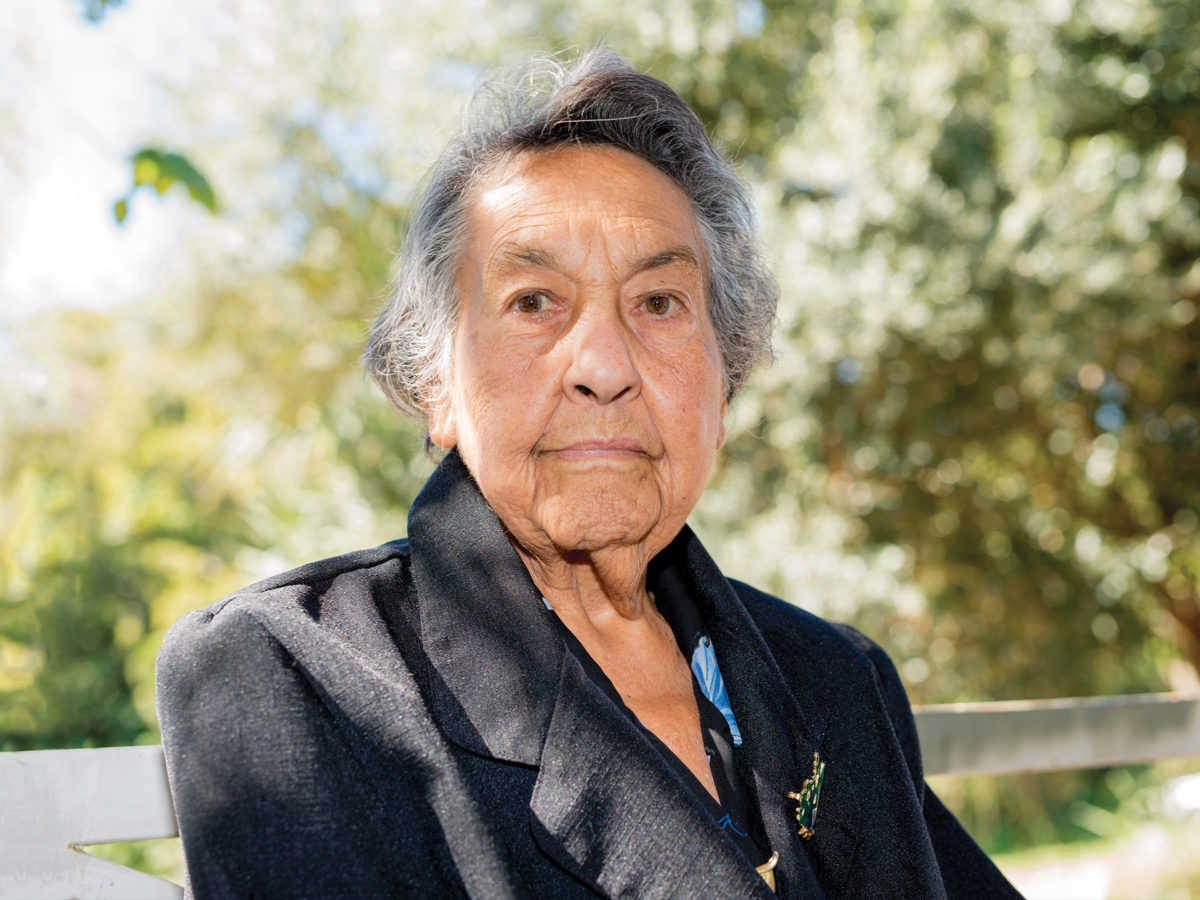
The Minjerribah-Moorgumpin Elders-in-Council was created to preserve, record and communicate the language and culture of the Minjerribah and Moorgumpin indigenous people of North Stradbroke and Moreton Islands. They educate thousands of local and international students and visitors to the island each year about Aboriginal cultural heritage. The Noonucal, Ngugi and Goenpul peoples have worked closely with the local councils and state governments on issues relating to the local people as well as the conservation of the pristine island environment. A significant reason for the success of this corporation can be attributed to the leadership of its President and Chairperson since its inception, Margaret Iselin.
Margaret Iselin (affectionately known as Aunty Margaret) has come to be known for her outstanding work in the Redland City to ensure acknowledgement and preservation of indigenous culture and heritage and for her highly successful endeavours in the Reconciliation process. Through her tenacity, her compassion for others and her vision, indigenous heritage and culture is prominent in this area. And while she has experienced hardship in her own life, she has remained resourceful and positive in her outlook.
Margaret was born on Dec 16, 1930, at the Lady Bowen Hospital, Brisbane, the eldest of nine children. They were one of thirteen families living at the Myora Mission on North Stradbroke Island and Margaret started school at the age of six, at the Mission School.
Growing up on the mission, food was rationed and luxuries were non-existent. Clothes were sent to the mission from Minister Trudgen or the mothers would make clothes. She and her sister sometimes wore clothing made by her mother from the calico bags in which the flour rations came. They would carry water from the wells each morning before going to school. When the mission closed in 1941, the family moved to One Mile. Margaret finished her schooling at Grade 6 level at Dunwich State School, aged fourteen.
She was fortunate enough to find work initially on the island, cooking and cleaning for the family of Mr Taylor, the administrator of the Dunwich Benevolent Asylum. The five shillings a week she earned helped to feed her family.
This was a time when, under the government Act, the movements of Aboriginal people were restricted by a permit system. Even to go by train from Cleveland to the hospital in South Brisbane required a permit from the local police station and the permit had to be shown at every stage of the journey. Under the same Act, Aboriginal people were obliged to work and that meant working wherever jobs were available.
Therefore, at the age of sixteen, Margaret went to work as a cook for a family of six on a property fifty miles outside Roma. The contract was for twelve months at five shillings a week, the sixty pounds being paid only at the end of the contract. Even at this young age, Margaret showed concern for the plight of indigenous people by sneaking leftover food to an Aboriginal family who lived by the river. She was forbidden by her employer to speak to them but used sign language to encourage the women to come and collect the food that would otherwise have been thrown out.
After her year in Roma, Margaret worked as a cook at the Grand View Hotel until she married Pat Iselin which brought her home to North Stradbroke Island. They married on April 23, 1949, at St George’s Church of England, Windsor.
Margaret and Pat had five children (including twins) within four years and Pat worked as a boilermaker at TAZI mining company and later Con Rutile. Upon retrenchment, Pat operated a taxi service on the island for thirteen years. Unfortunately, Pat passed away a few years ago. Family has always come first and this loving extended family certainly enjoys getting together when they can. There are now 20 grandchildren and 20 great-grandchildren.
After marrying, Margaret turned to voluntary work, assisting at local kindergartens and making lunches at schools. She also helped other organisations on the island like the North Stradbroke Island Housing Co-op and the Health Centre. Dr Foxton and the local bank clerk would visit the island once a week on a Wednesday and Margaret would ensure that tea, coffee and sandwiches were available for these welcome visitors. She also presented educational talks on heritage, culture and Aboriginal life on North Stradbroke Island, taught language to children in schools and has promoted awareness of indigenous history. Margaret is renowned for her tasty Johnny Cakes too. She co-authored a book for use in schools, called Minjerrribah, An Indigenous Story of North Stradbroke Island and also prepared a Bush Tucker book.
Five years in the making, she was instrumental in getting the Jandai Language Dictionary and interactive CD published in 2011. Although the Aboriginal people were not permitted to speak their languages under government direction from the 1930s, the grannies would take the children for long walks in the afternoons after school and, in very quiet tones, they would pass on the words for plants and animals in the area. Meanwhile, they would only speak English at the Mission.
Margaret’s determination was again obvious when she worked to ensure that the courage of the Aboriginal men who risked their lives in wild seas trying to rescue people from the shipwrecked Sovereign was given public recognition. A monument with a plaque was erected at Amity Point in 2002, on what was known as Sovereign Day. Replicas of the breastplates awarded to the men for their bravery, are on public display at the Elders Museum too. The originals were retained by the Queensland Museum.
In times of need, with the passing of indigenous people on the island, Aunty Margaret and the Elders also support the families and make arrangements with the Stradbroke Island Ferries who assist with the funeral arrangements.
More recently, the opening of Terra Bulla Leumeah in 2006, at the Myora Mission, was the culmination of a dream for Aunty Margaret and the Elders. The project was undertaken in collaboration with the Redland City Council and, with the ongoing support of local companies, recognises the significance of the Mission within the history of the area. It provides information to educate the public about the indigenous plants and animals which were an integral part of the lives of Aboriginal people in traditional times.
But whilst Margaret has also been recognised for her many contributions to the local community, she is always humble in accepting these accolades. She received a Tourism Award in 1998 for her cultural and heritage talks and she was given a Commonwealth Medal as part of the Centenary of Federation Celebrations. In 2001, she was named as the inaugural Grand View Living Treasure and, in 2002, she received a Citizenship Award at the Australia Day Ceremony. At the same ceremony, the Elders-in-Council received an Encouragement Award for Sovereign Day.
Since its humble beginnings in 1993, the Elders-in-Council, with Margaret in the driver’s seat, has certainly gained the respect of the wider community. This dedicated group has worked with the Department of Primary Industries to oversee the protection of turtle and dugong populations, assisted the police with first time offenders and helped with the work of Family and Community Services, Justice Department and Boys Town. She has guided first time offenders when they visit Mulmakul Rock, encouraging the boys to recognise the healing properties of this special area of the island.
In 2008, a group of Elders documented the local indigenous culture, history and contribution to the Moreton Bay area on a series of illustrated panels. The panels were first displayed at Parliament House and the project was officially launched in mid-2009 as part of the celebration of 150 years of Queensland (Q 150). The panels are now part of a special display on North Stradbroke Island.
The latest achievement of the Elders has been the upgrade of Terra Bulla Leumeah; this provides pathways for easy wheelchair access and signage explaining bush tucker. These upgrades were launched at their 21st celebrations on March 21 this year.
Clearly, this dynamic group of people continues to ensure that the cultural heritage and contribution of our indigenous people will be passed on to future generations. At a time when the loss of many Aboriginal languages along with their culture is evident around Australia, we must be truly grateful that our local indigenous traditions are being upheld and indeed venerated…
Catherine Heiner
I first met Aunty Margaret when she delivered cultural talks to my students many years ago. I have since kept in contact and we have maintained a strong alliance with the Minjerribah-Moorgumpin Elders-in-Council through my professional women’s organisation, Soroptimist International Bayside. We worked with the Elders and the Qld Museum to provide a glass and wooden cabinet to house the replica breast plates for Sovereign Day in 2002. We also nominated Aunty Margaret for the Living Treasure Award in 2001 and featured her story in a Soroptimist publication, Today’s Women of the Redlands in 2008. The Elders and, in particular, Aunty Margaret, continue to inspire me with their dedication and tireless community work…
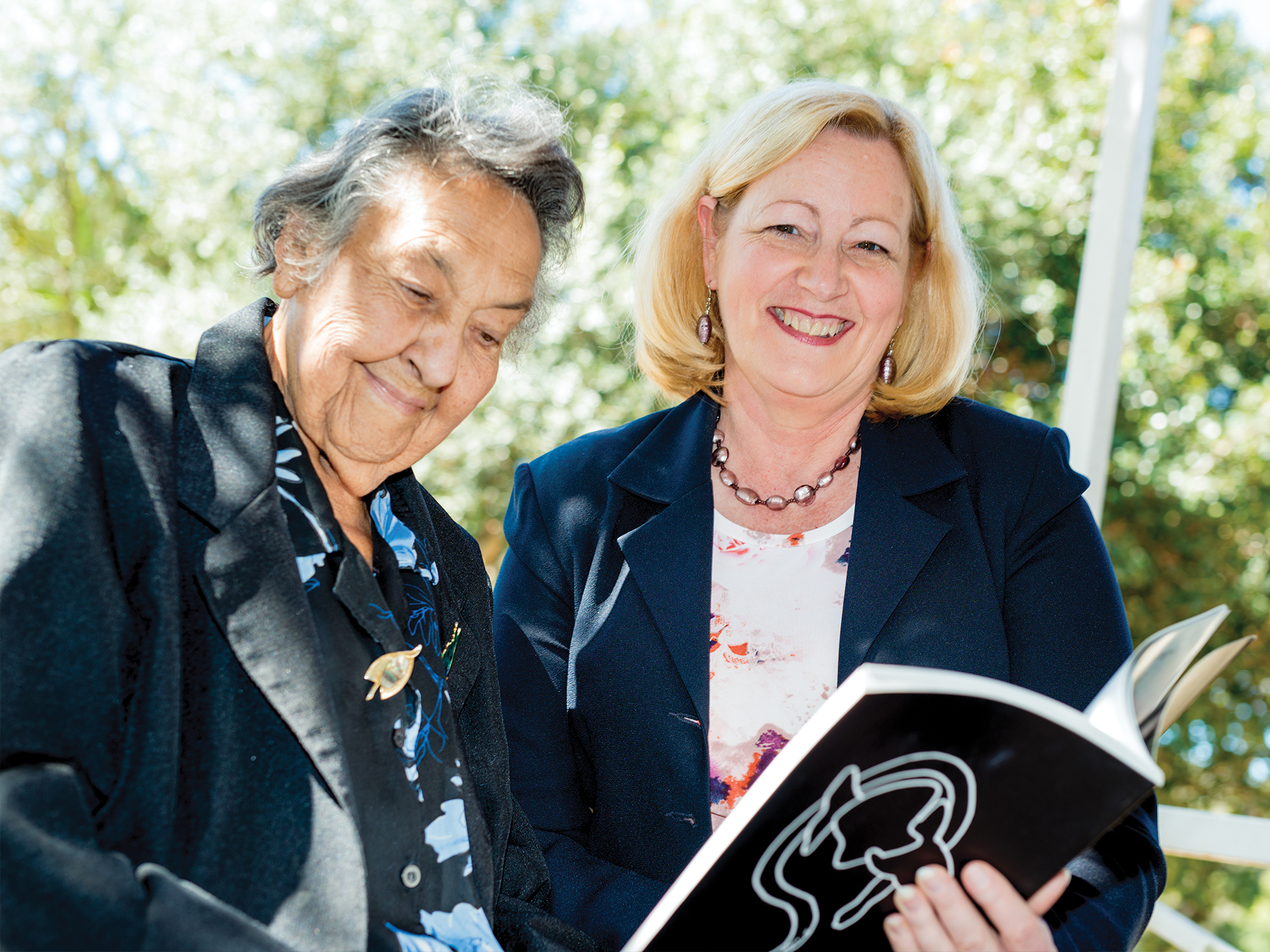
Aunty Margaret Iselin and Catherine Heiner