Eric Anglès
‘Historic account of Australian dinosaurs and thecodonts.’
‘Historic account of Australian dinosaurs and thecodonts.’
‘Historic account of Australian dinosaurs and thecodonts.’
‘Historic account of Australian dinosaurs and thecodonts.’
‘Historic account of Australian dinosaurs and thecodonts.’
Dinosaurs and Thecodonts
Dinosaurs and Thecodonts
Dinosaurs and Thecodonts
Dinosaurs and Thecodonts
Dinosaurs and Thecodonts
As we examine Australian geology, there is abundant evidence of ancient life that once thrived and dominated. We find layers of sedimentary material that tell a story of our past, our geological chronology and within these layers of this stratification, rests the fossil evidence of times past.
Carnarvon National Park is a hotspot for large carnivorous (not vegetarian) thecodonts (amphibians) that dominated the dinosaurs. Winton’s Lark Quarry Conservation Park, with over 3,300 dinosaur tracks, is the only known site of a dinosaur stampede on the planet.
By air, land and sea, thecodonts and dinosaurs ruled the Australian landscape, throughout the Triassic Period (206 to 248 Million Years Ago), Jurassic Period (144 to 206 Million Years Ago) and Cretaceous Period (65 to 144 Million Years Ago), over a period of 183 million years.
Prior to this time, Pangea, a supercontinent comprised of all the landmasses of all the continents of the earth, separated into two main supercontinents 200 to 180 million years ago, Laurasia of the Northern Hemisphere and Gondwana of the Southern Hemisphere (including Australia) and intersecting in time at the end of the Triassic Period and the beginning of the Jurassic Period.
Thecodonts, the close relation of the “modern day crocodile” are a direct ancestor of the dinosaurs and in most of Gondwana, during the Triassic Period, reptiles were the dominant form of life on land. In Australia, however, Thecodonts ruled as evidenced by the Crater Site at the Carnarvon National Park, containing fossils that date from the Triassic Period.
From here, an isolated island called Sahul, is a combined landmass including Australia, New Guinea and Tasmania that separated, 60, 000 years ago to form what we see today.
Below is a brief list of known thecodonts and dinosaurs that have graced our prehistory:
Thecodonts
Thecodonts
Thecodonts
Thecodonts
Thecodonts
Kalisuchus Rewanensis (carnivore)
230 MY | 3 M Long, 1 M High
Dicynodont (herbivore)
230 MY | 1 M Long, 0.5 M High
Dinosaurs
Dinosaurs
Dinosaurs
Dinosaurs
Dinosaurs
Ozraptor (carnivore)
170 MY | 3 M Long, 3 M High
Rhoetosaurus (herbivore)
190 MY | 15 M Long, 7 M High
Atlascopcosaurus (herbivore)
115 MY | 3 M Long, 1 M High
Australovenator (carnivore)
95 MY | 6 M Long, 2 M High
Austrosaurus (herbivore)
110 MY | 20 M Long, 4 M High
Diamantinasaurus (herbivore)
100 MY | 16 M Long, 2.5 M High
Fulgurotherium (herbivore)
110 MY | 1.5 M Long, 2 M High
Kakuru (omnivore)
120 MY | 2.5 M Long, 1 M High
Leaellynasaura (herbivore)
115 MY | 3.5 M Long, 1 M High
Minmi (herbivore)
119 MY | 2 M Long, 1 M High
Muttaburrasaurus (herbivore)
112 MY | 7 M Long, 2.5 M High
Qantassaurus (herbivore)
115 MY | 2 M Long, 1 M High
Rapator (carnivore)
105 MY | 9 M Long, 4 M High
Serendipaceratops (herbivore)
118 MY | 2 M Long, 1 M High
Timimus (omnivore)
106 MY | 3.5 M Long, 1.5 M High
Wintonotitan (herbivore)
100 MY | 15 M Long, 3 M High
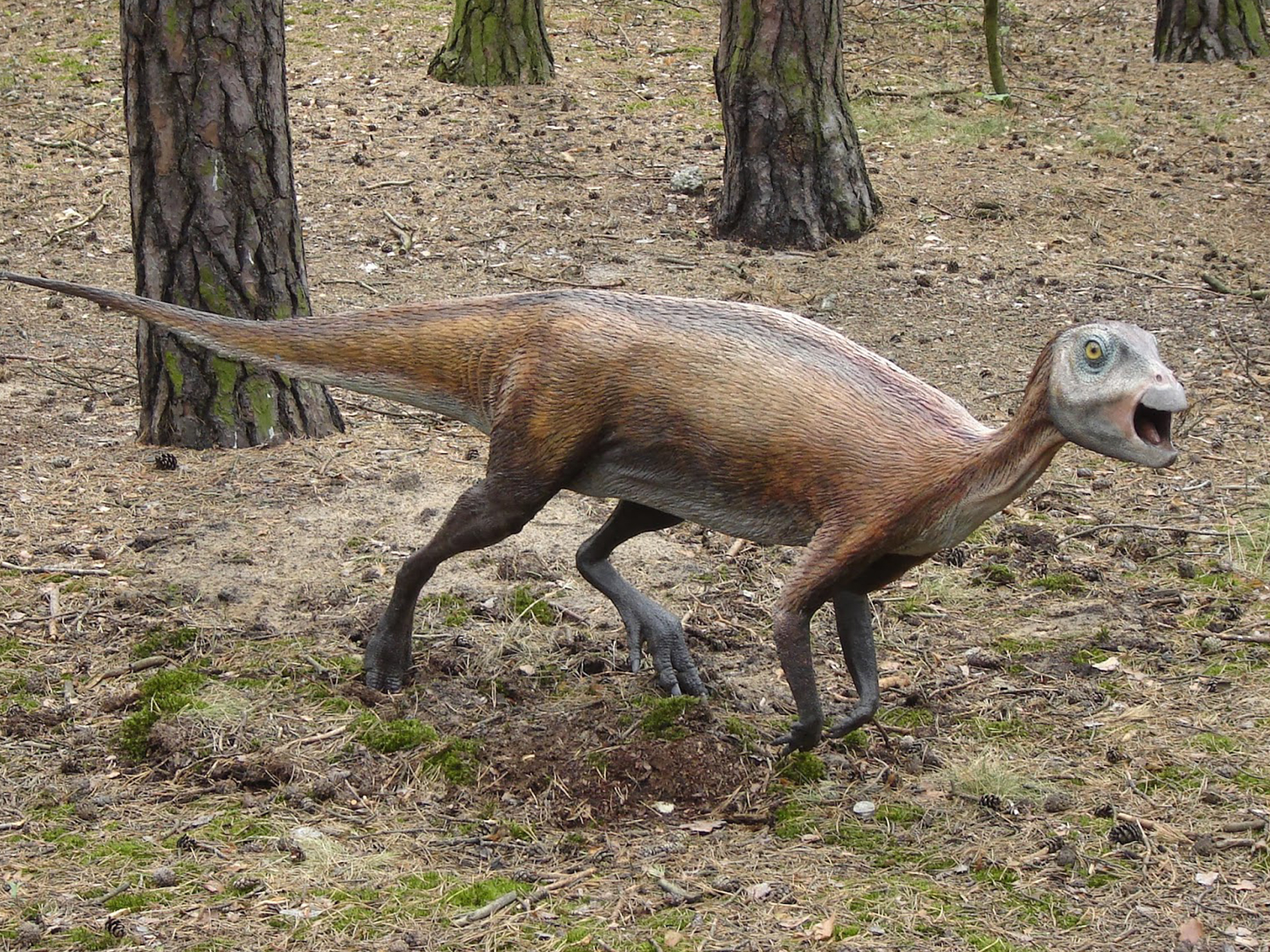
Atlascopcosaurus loadsi
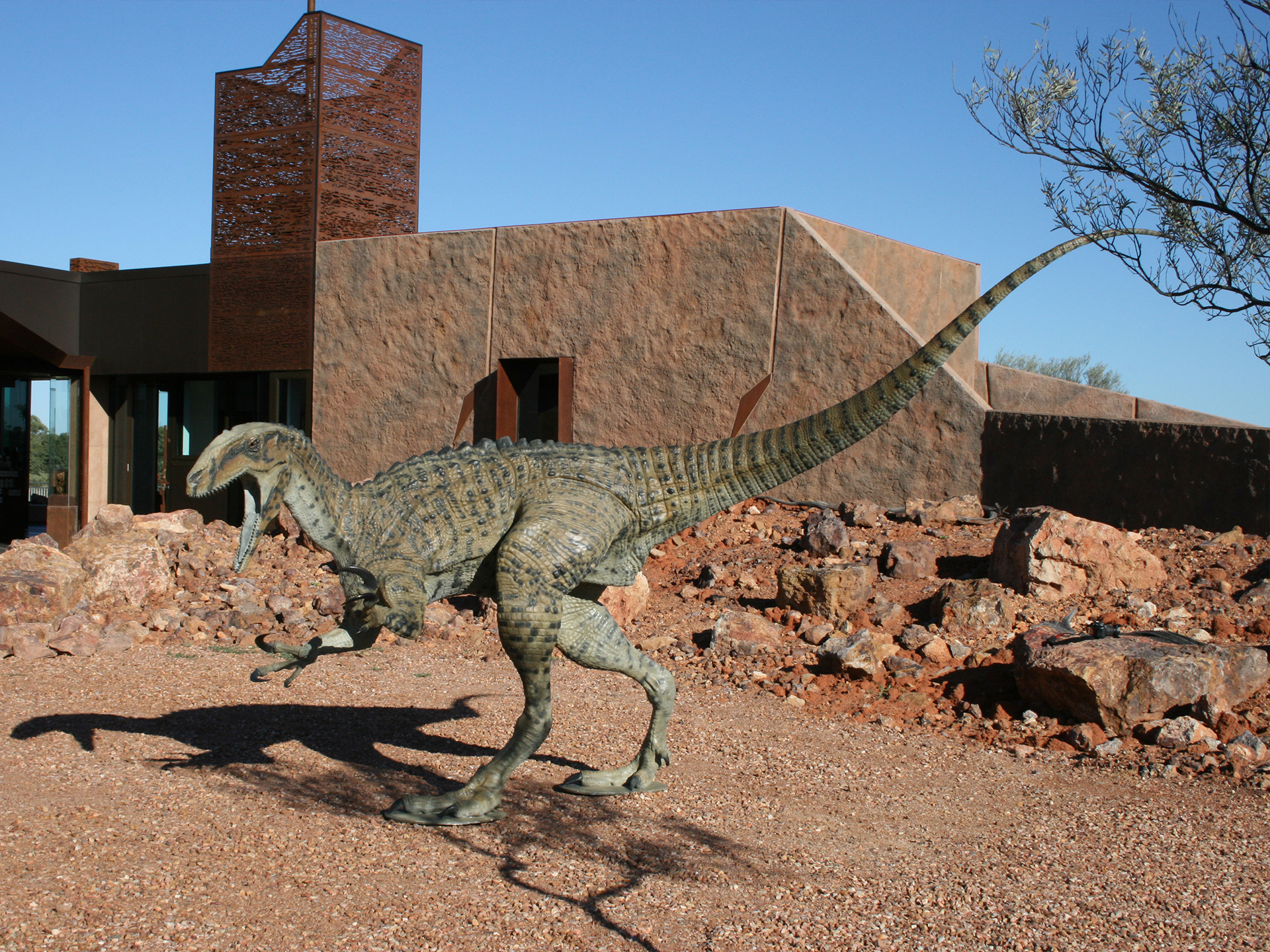
Australovenator wintonensis
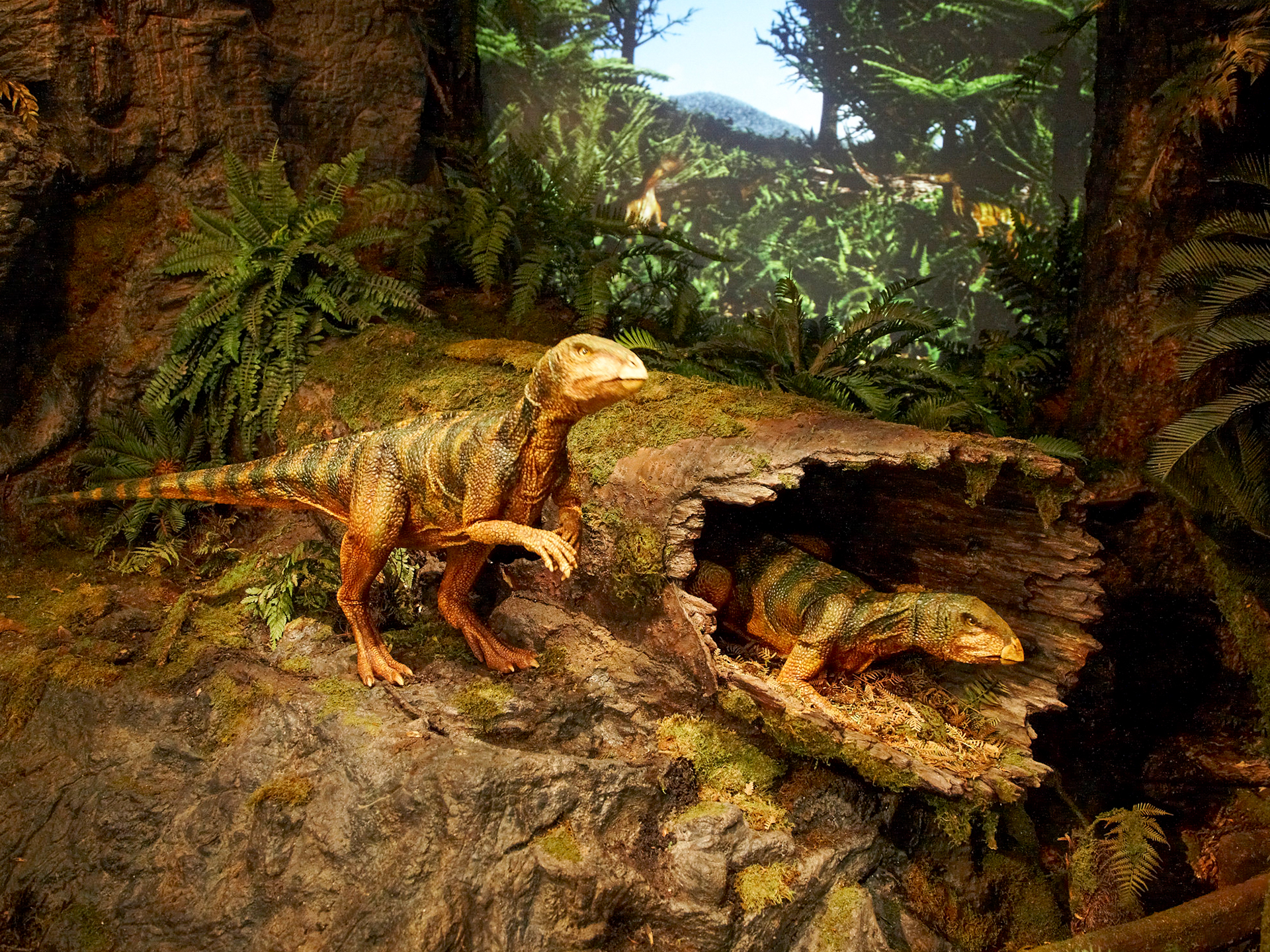
Qantassaurus