Paul Loveday
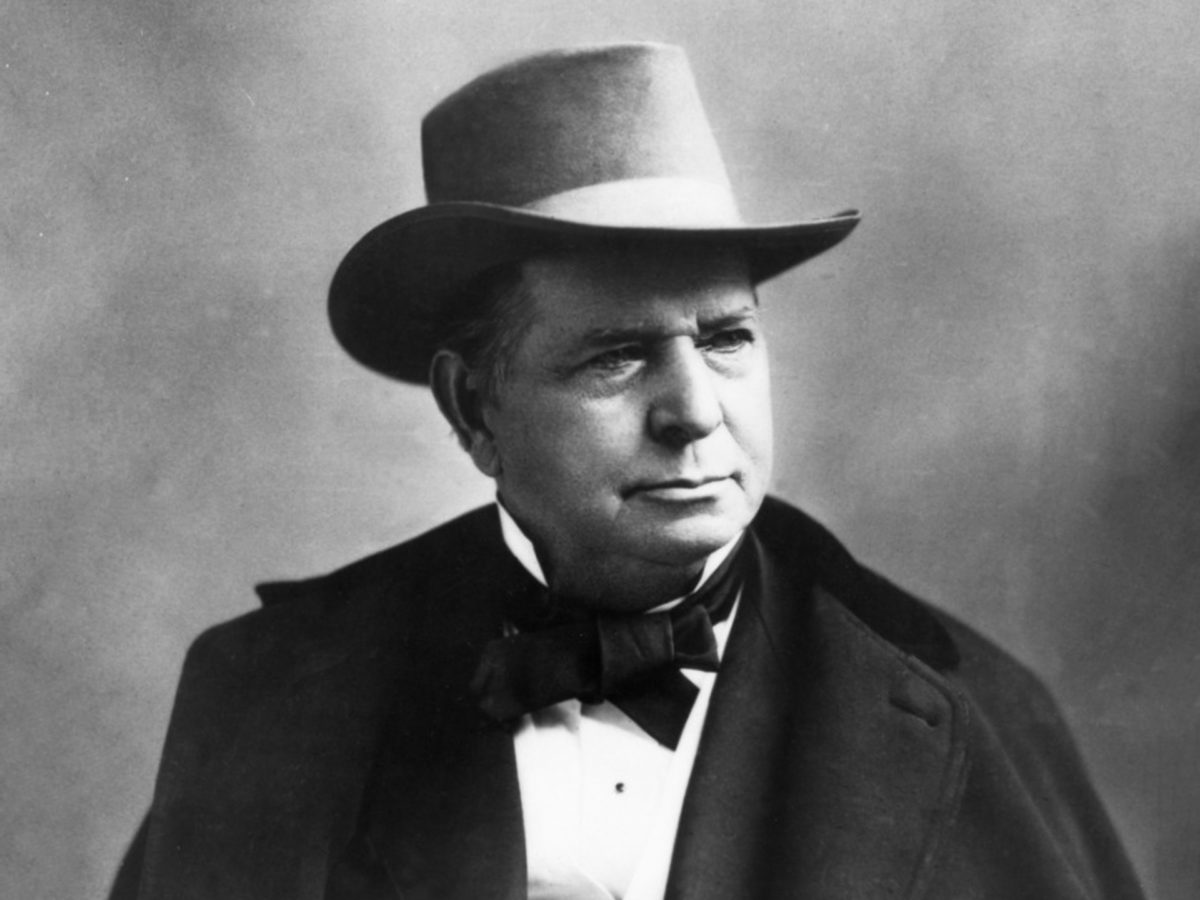
Feature image is of Mr Oliver Fisher Winchester.
‘Oliver was a generous employer and paid excellent wages. He was lavish with praise and urged his workers to be innovative.’
‘Oliver was a generous employer and paid excellent wages. He was lavish with praise and urged his workers to be innovative.’
‘Oliver was a generous employer and paid excellent wages. He was lavish with praise and urged his workers to be innovative.’
‘Oliver was a generous employer and paid excellent wages. He was lavish with praise and urged his workers to be innovative.’
‘Oliver was a generous employer and paid excellent wages. He was lavish with praise and urged his workers to be innovative.’
Oliver Winchester Rifles
Oliver Winchester Rifles
Oliver Winchester Rifles
Oliver Winchester Rifles
Oliver Winchester Rifles
How are things going in your business? Are you doing well, is all on track to achieve your goals? If you answered ‘yes’ to these questions, there may seem no point in looking beyond your present horizons. And yet, some of the greatest fortunes have been made by people who were already successful but moved into businesses that were totally unrelated to the business that made them successful.
When we see the name, Winchester, we may think of the magnificent gothic cathedral in Hampshire, England. However, it’s more likely that name will evoke a vision of guns, particularly the famous lever-action rifle that is often referred to (in company with the Colt .45) as ‘the gun that won the West’.
The ancestor of the Winchester Repeating Arms Company was the partnership of Horace Smith and Daniel Wesson of Norwich, Connecticut. These two gentlemen would later form the famous Smith & Wesson Company noted for its manufacture of the ultra-reliable .38 Police Special revolvers much loved by law enforcement agencies around the world.
In 1852, Smith designed a much-improved rifle based on a design by Lewis Jennings and formed a company known as The Volcanic Repeating Arms Company. The partners also hired Benjamin Henry, a talented designer and gunsmith.
The Smith & Wesson partnership, in order to manufacture what they called the “Volcanic” lever-action rifle and pistol, sought investors and incorporated as the Volcanic Repeating Arms Company.
Oliver Winchester was a very successful clothing manufacturer in New York City and New Haven, Connecticut. His company was noted for superbly cut and finished shirts for men. During this period, he discovered that a division of Smith & Wesson firearms was failing financially with one of their newly patented arms. Having an eye for opportunity, Winchester assembled venture capital together with other stockholders and acquired the Volcanic Repeating Arms Company, in 1850. By 1857, Winchester had positioned himself as the principal stockholder and President of the company and relocated to New Haven, Connecticut changing the name to New Haven Arms Company.
Initially, the company was plagued by sluggish returns due, in part, to the design and poor performance of the Volcanic cartridge: a hollow conical ball filled with black powder and sealed by a cork primer. Although the Volcanic’s rifle design far outpaced any rival technology, the poor performance and reliability of the .25 and .32 calibre cartridges kept the company from matching the commercial success of their competitors.
Fortunately for Winchester, his chief engineer, Benjamin Henry would prove an invaluable asset. Henry sought to improve on the Volcanic repeating rifle, by enlarging the frame and magazine to accommodate seventeen of his newly redesigned, all-brass case, .44 calibre rimfire cartridges. This new cartridge put the new company on the map, and in October 1860, Henry’s ingenuity was rewarded with a patent, in his name, for what was to become the famous Henry rifle.
The Henry Rifle was manufactured for almost six years with a total production of approximately 12,000 rifles, both iron and brass frame models. With each rifle having a wholesale price of approximately $35, the Henry amassed sales of some $420,000. In today’s terms, that represents about $8.2 million. Following the success of the Henry rifle, the company was reorganised once more and renamed the Winchester Repeating Arms Company.
In 1866, another employee, Nelson King designed and patented improvements that remedied flaws in the Henry rifle by incorporating a loading gate on the side of the frame and integrating a tubular, sealed magazine which was covered by a wooden fore stock. The first rifle to carry the Winchester logo was the Model 1866, nicknamed the Yellow Boy due to the preponderance of brass parts in the construction.
Repeating rifles were not widely used until after the American Civil War, when they became increasingly popular with civilians. Hundreds of thousands of lever-action Winchester rifles were in the hands of the pioneers heading west to the prairies. It was estimated in 1910 that 85% of rural homesteads in America could boast at least one Winchester firearm. More than 10 million Winchester lever-action rifles have been made and the company has a huge assortment of other gun styles to its credit.
And Winchester rifles have never been cheap. In 1898, a lever-action Winchester cost the equivalent of five month’s pay for a rural worker. Winchester kept all his business acquisitions going while running the arms company. He was reluctant to sell a business once he made it profitable.
Oliver Winchester was a generous employer who paid excellent wages for a shorter working week than any of his competitors. He was lavish with praise and urged his workers to be innovative and competitive with one another.
Winchester was also active in politics, serving as a New Haven City Commissioner, Republican Presidential elector in 1864 and as Lieutenant Governor of Connecticut from 1866 – 1867. He was philanthropic by nature and a major benefactor of Yale University.
When Winchester died from a stroke in December 1880, aged 70, his ownership in the company passed to his son, William Wirt Winchester who died of tuberculosis within four months of his father’s death.
There was serious money in the Winchester family thanks to the shrewd business acumen of Oliver. His daughter-in-law, Sarah (William’s wife), received the bulk of the family estate valued at $20 million, that’s approximately $1.51 billion in today’s money and an income from the arms company worth $35,000 per week in current values.
Sarah, believed the family was cursed by the spirits of those people killed by the Winchester rifle and moved to San Jose, California. With her inheritance, she began building a chaotic mansion now known as the Winchester Mystery House, intending to confuse the spirits seeking revenge.
Although a more than able business manager, Oliver Winchester was never a weapons designer. Many of the designs the company produced and made famous after his death were from the pen of genius gun maker, John Browning, who would go on to design most of the machine guns used by the US military up to and including the Viet Nam War.
The Winchester Arms Company has suffered mixed fortunes since Oliver’s death with most of the weapons bearing the iconic trademark now made by famous Belgian armourer, FN and The Browning Arms Company of Utah. Considering the close relationship between the Winchester Company and John Browning, it seems fitting that the company founded by Browning should now be making the current Winchester sporting rifles.
So, take a look around, there may be another business out there that would really blossom with your entrepreneurial skills – you just might be another Oliver Winchester.
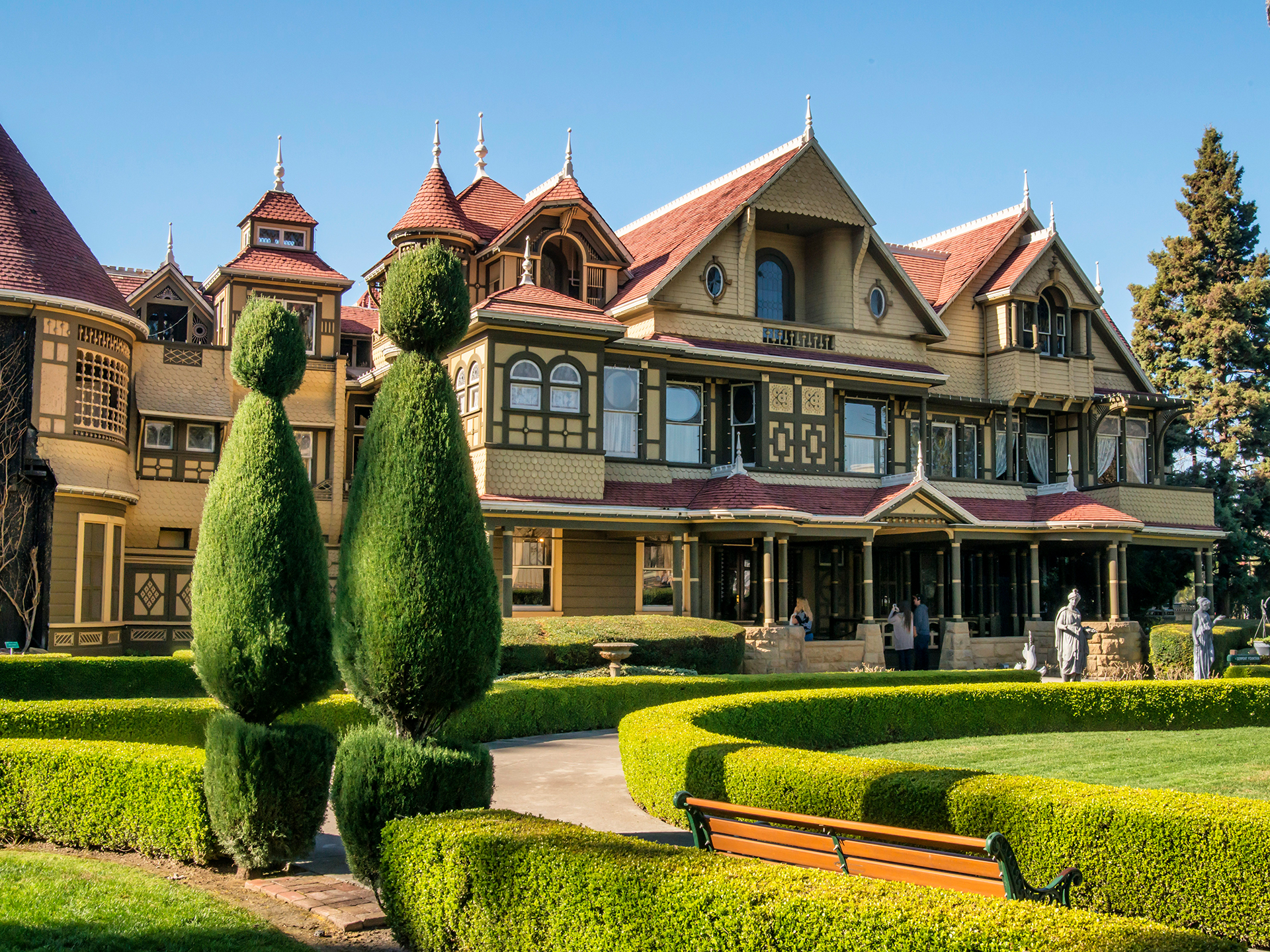
Winchester Mystery House
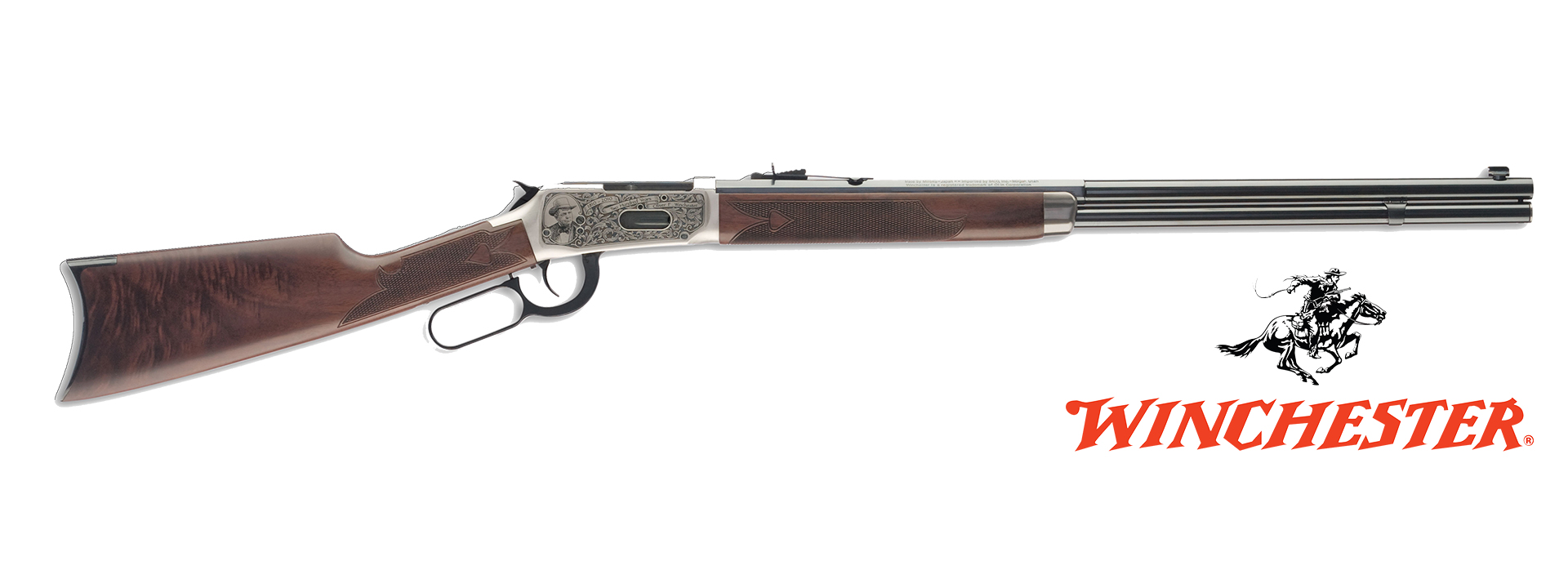
Winchester Rifle 1894