Catherine Heiner
‘During World War 2, large numbers of children, evacuated from major cities in England and sent to Aysgarth for protection.’
‘During World War 2, large numbers of children, evacuated from major cities in England and sent to Aysgarth for protection.’
‘During World War 2, large numbers of children, evacuated from major cities in England and sent to Aysgarth for protection.’
‘During World War 2, large numbers of children, evacuated from major cities in England and sent to Aysgarth for protection.’
‘During World War 2, large numbers of children, evacuated from major cities in England and sent to Aysgarth for protection.’
Operation Pied Piper
Operation Pied Piper
Operation Pied Piper
Operation Pied Piper
Operation Pied Piper
When we think of World War II, we think of its fighting soldiers and on civilians near the front line. There are also the horrific stories of those persecuted under Hitler and sent to Concentration and Death Camps. One impact with which we are perhaps less familiar is the effect of the war on large numbers of children who were evacuated from major cities in England and sent to the countryside for protection.
In a campaign, originally known as Operation Pied Piper, around 3.5 million people, mainly children, were evacuated throughout the Second World War. There were six city areas deemed “vulnerable” to attack and parents were, therefore, encouraged to send their children to safer “reception” areas for the duration of the war. Posters recommended that parents put their children’s lives first and send them away to be looked after.
Whilst most were sent to country towns and villages within Great Britain, some children were also sent overseas to Canada, the United States, South Africa, Australia and New Zealand. Many employees of large companies such as Kodak and Hoover, for instance, would offer their homes in the US to children of employees in the UK. Meanwhile, other children were sent to relatives and friends overseas or just to families willing to open their arms to support the Commonwealth. This aspect was coordinated through the Children’s Overseas Reception Board.
One such child to be evacuated from the vulnerable city of Newcastle in the north of England was George Brown, who now lives in the Redlands. The Newcastle and Gateshead area was deemed an “at risk” zone since, as a shipping manufacturing area, it was a prime target for attack. It was in this region that the spit fire engines were made for the war effort too.
George and his sister, Sarah, were evacuated in the first round of evacuees on September 1, 1939, two days before war was even declared in Britain. George was 11 and Sarah was 7. Some 1.5 million were evacuated even before the first shot was fired. Initially, George and Sarah were sent to Sand Hutton in North Yorkshire, but the family brought them home by the beginning of 1940. Many people called it a “Phoney War”; no shells had been fired and they thought that the danger had been exaggerated.
However, with the Blitz bombing of 1940, there was a second wave of evacuations. George (then 12), Sarah (7) and younger brother, Edmund (4 ½), were evacuated to Aysgarth, once again in North Yorkshire. They left behind their parents, older brother and sister, Alex and Mary, and younger sister, Margaret (2). Three more siblings were born subsequently.
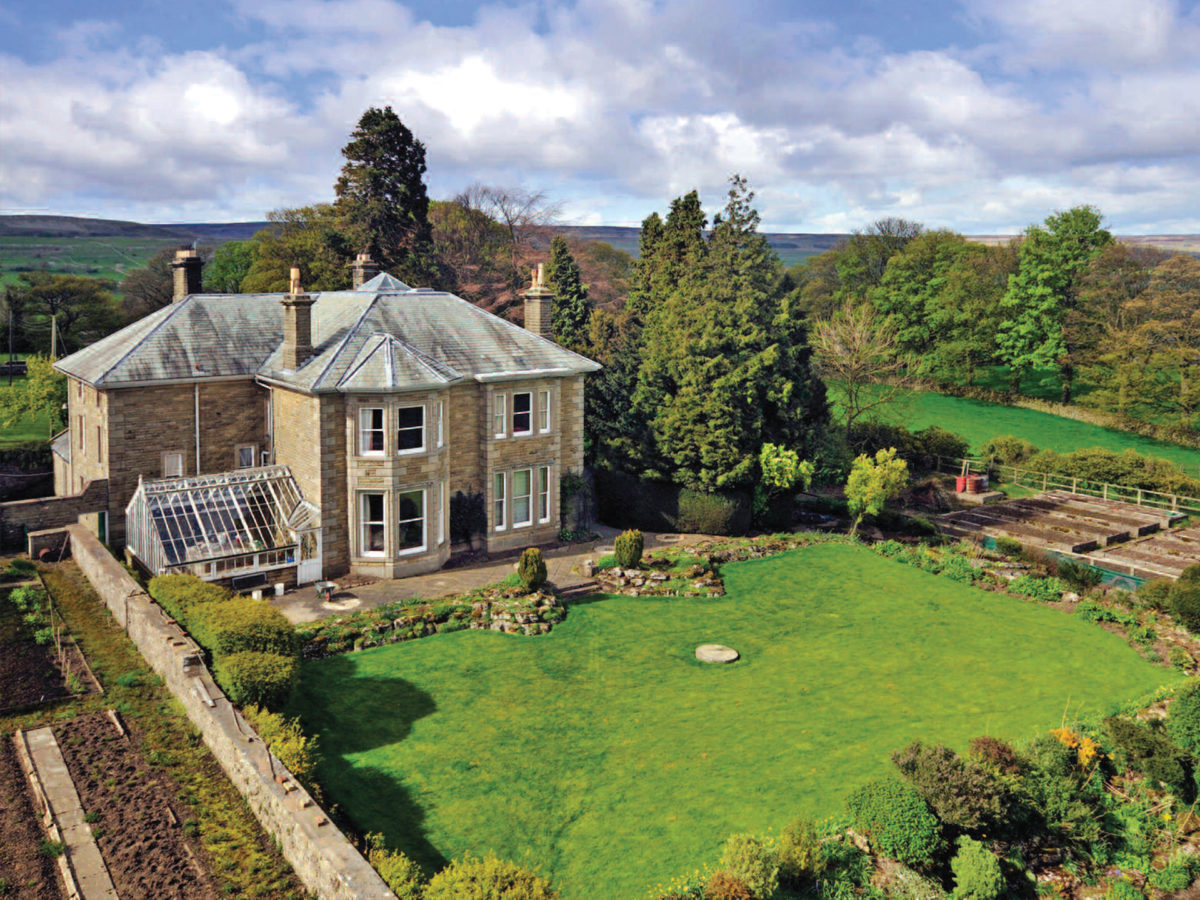
Initially, George and Edmund stayed with the Watsons but, after 6 months, this family was unable to afford to feed extra mouths, so the boys moved into a much larger house called Flattlands and were looked after by Miss Lattimer, the daughter of the owners of the house. Meanwhile, Sarah was “adopted” by two sisters in another house in Aysgarth.
George’s experiences though were, in fact, quite positive. He recalls fondly the years he spent in Aysgarth up to the age of 14, at which time he had to return to Newcastle in order to work for the war effort and help support the family. His brother, Edmund, remained with the Lattimers for the duration of the war, returning to the family he was 9 years old. Sarah also remained at Aysgarth until the end of the war.
George remembers being taken by bus from Newcastle with a large number of children, each wearing a luggage tag with their personal details, and carrying his/her own gas mask and small package of personal items. They had to make a stop on the way to Aysgarth as some children were sick. Upon arrival at their destination, they were delivered to different people who had come to the drop off area in the village. This was predetermined to speed up the process, whereas stories from other evacuations reveal that host parents would decide by saying, “I’ll take that one.”
Apparently, a group of a dozen children delivered to Aysgarth took it upon themselves to gather together and then to walk home because they were missing their parents. It wasn’t long before the police rounded them up and returned them to their host families. George and his siblings were not party to this and felt quite safe and happy staying in the countryside.
“There was so much freedom,” recalls George. “I used to walk along the moors looking for bird eggs. My mate, Bob Hope (yes that was his real name) and I learnt to swim in the river Ure to avoid being swept away into Aysgarth Falls. We had a lot of fun.
“Edmund loved staying there and he loved Miss Lattimer. Edmund loved to sing and there were plays and singing performances organized by the local School of Arts group in which he was involved. Edmund stayed till the end of the war and he didn’t want to leave the place. He particularly loved the cat and looked after it so well. It was a white cat. Miss Lattimer gave the cat to Edmund when he left Aysgarth to return home.”
The young boys had chores to complete for their host family of course. They would wash the windows on the bottom floor of the house every Saturday morning and would receive 50 pence a week, along with the war bonds given out at the Post Office. There was a small allowance provided to take care of the children. George would send the war bonds back to his mother to help care for the family.
Other jobs included cleaning out the horse sheds; the owners had Clydesdale horses. George and Edmund didn’t have far to travel to school as it was at the end of the driveway to their house. Here, they would catch up with Sarah along with other friends from Newcastle. They would never eat their evening meal with the owners of the house; instead they would take their meals with Miss Lattimer; a servant prepared their meals for them.
This memorable journey back in time elicited the story of Miss Lattimer scrubbing the boys’ hair to make sure it was dry after their bath. “She probably wanted to make sure it stayed on our heads,” George said, and, to this day, he has retained a full head of hair. Perhaps there was something in this ritual that ensured long term growth. Either that or it was the Brylcreem regimen that George maintained from the 60s through to today.
George joined the local choir and attended church each Sunday. On a recent trip back to Aysgarth earlier this year, George was keen to show his grandchildren the spot he proudly occupied in the choir stalls for those enjoyable years in the Aysgarth parish. He was also surprised to find, on the wall of the church, a tribute to Madge Blades, organist at the church for 69 years up until her death in 1979; Miss Blades was one of the sisters who had looked after Sarah during the war.
Although the younger children didn’t see their parents until after the war ended, their older sister, Mary, would come to visit them in Aysgarth, travelling by train, every second weekend, in order to check on their welfare and provide the connection with family. During the latter part of the war, though, she also joined the war effort at the age of 18, as a member of the Army Training Services.
George also mentioned that his cousin, also called George, had been evacuated to Canada to live with a family there. He loved the place so much that he never returned. George remained in Canada, marrying, having children and, sadly, passing away in 2014.
So, whilst some children may have found it traumatic to be away from their parents for long periods of time during the war, George instead remembers with fondness his time living in the English countryside. In fact, it was somewhat disheartening for him to have to return to Newcastle in 1942, not because he had to go to work but because he had to return to school until his fourteenth birthday in order to be granted a School Leaving Certificate. He claims he had already learnt all the information he had to study upon returning to school in Newcastle.
Perhaps this early exposure to life away from his family, or simply the fact that he was from a family of nine children, provided the impetus for George to jump on a ship and come to Australia in the post-war European immigration program, which operated under the slogan, “Populate or Perish”. He even returned to England, found a bride and the two of them settled in Australia and subsequently raised their two daughters here in the “Lucky Country”. As pioneers in the 1950s, George built his first house, even designing and crafting the first 3000 bricks using a mold, well before the Besser block was launched on the market.
Whilst the government was quick to tell people that the evacuations of children was highly successful, Anna Freud (daughter of Sigmund) conducted a 12 month study of the impact of this separation of the children from their parents. She found that the trauma of separation was far worse than the impact of living through bombing raids would have been. The impact of this and other wars was certainly far reaching, not just on the soldiers and those near the firing line, but on those left on the Home Front and indeed the children.
George is my father and it was such a privilege to be able to take him back to England earlier this year and especially to visit Flattlands and to chat with the current owners of the house which Dad remembered so fondly from those war years.

George Brown in 2015
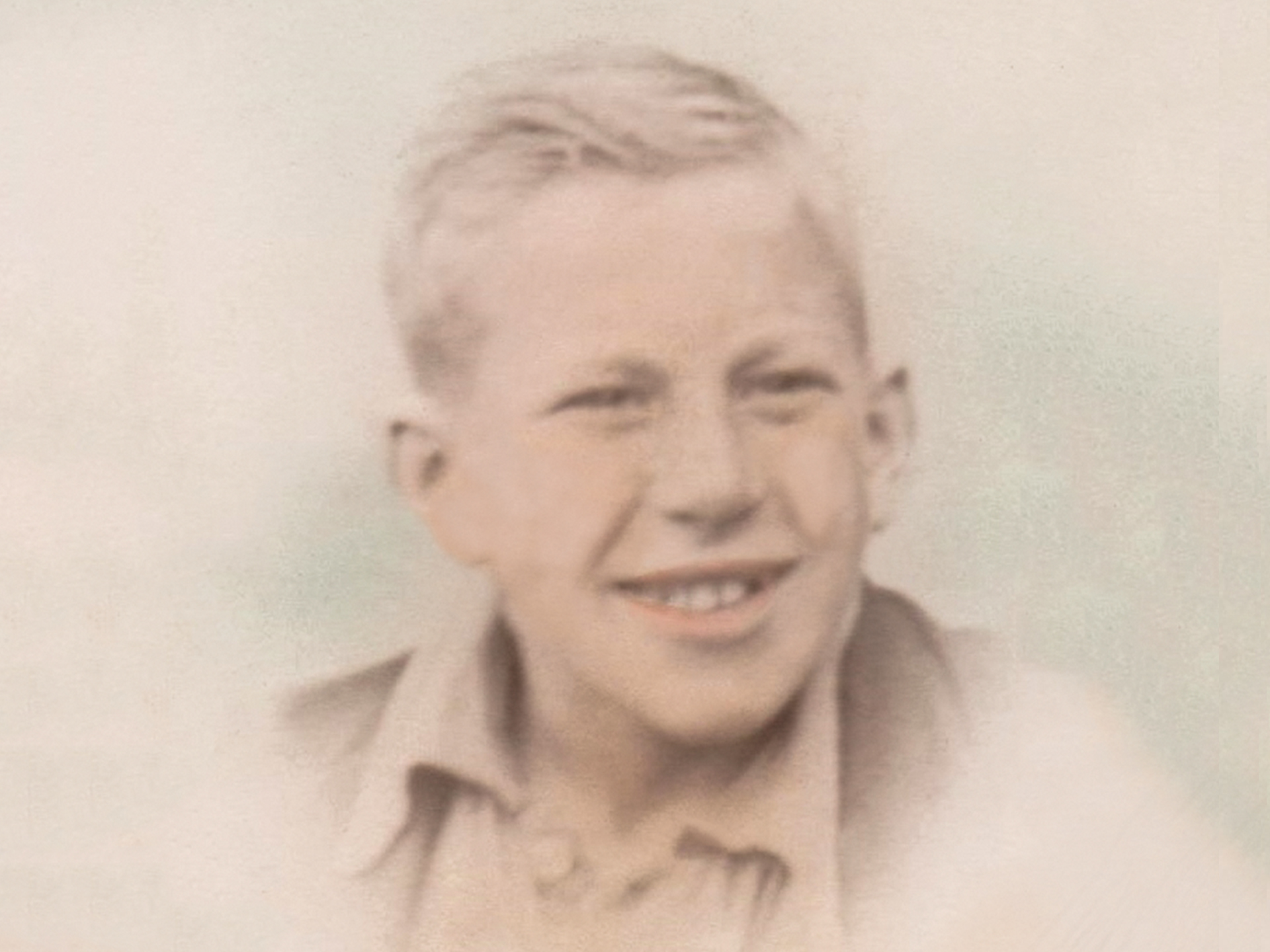
George Brown in 1940