John Daffy
‘Softly spoken and very articulate, Catherine breaks down sophisticated and inter-related photographic concepts, into simple, fun, easy to remember exercises..’
‘Softly spoken and very articulate, Catherine breaks down sophisticated and inter-related photographic concepts, into simple, fun, easy to remember exercises..’
‘Softly spoken and very articulate, Catherine breaks down sophisticated and inter-related photographic concepts, into simple, fun, easy to remember exercises..’
‘Softly spoken and very articulate, Catherine breaks down sophisticated and inter-related photographic concepts, into simple, fun, easy to remember exercises..’
‘Softly spoken and very articulate, Catherine breaks down sophisticated and inter-related photographic concepts, into simple, fun, easy to remember exercises..’
Snapshot Advice
Snapshot Advice
Snapshot Advice
Snapshot Advice
Snapshot Advice
Holiday planned, flights and accommodation booked, transfers sorted, travel documentation in order and travel insurance paid – you’re ready to go.
Perhaps not quite … packing your digital camera for the trip is one thing, but knowing how to use it properly to record your holiday experiences, is an entirely different matter.
If you always leave your digital camera in Auto mode, then it’s a little like buying a high-performance sports car and only driving it around in first gear; or owning a sophisticated home entertainment system and only listening to one far away, scratchy AM station.
In real terms, virtually every digital camera on the market today is the equivalent of that high-performance sports car or home entertainment system.
Don’t think so? Well consider this:
The Apollo Guidance Computer that assisted Neil Armstrong to touch down on to the moon on July 20, 1969, had just 4 kilobytes of RAM and total memory storage of 32 kB.
Yet just one single photograph on a very modestly priced digital camera, holds nearly 1,000 times more data than the NASA’s AGC could manage.
A typical mobile phone such as an iPhone operates at a speed exceeding 1,000 times faster than the AGC’s 2 Megahertz processor, whilst having two million times more storage capacity and being nearly 300 times lighter.
It doesn’t matter if you don’t know a Gig from a Meg or a processor from a sensor.
What does matter, is that you understand your digital camera has the potential, the power and functions to launch you into an entirely new world of photographic fun and sensational holiday images.
In photographic terms, it can take you to the moon, all you need to do is to learn how to take it off the Auto function. If you are happy with the shots you now are taking in Auto, you’ll be stunned how much better your photos become once you rotate a button and explore the camera’s menu settings.
Personalised instruction on how to do that and get the most stunning shots of overseas cities at night, or even around Brisbane, is extremely valuable and surprisingly not expensive. Most good photographic suppliers also run beginner to advanced photographic instructional sessions.
Geared for participants of very diverse skill levels, in a single evening’s leisurely stroll around the Southbank precinct on the Brisbane River, the course steps people through the basics of turning their digital cameras into devices of incalculable value and creativity.
I tagged along with Queensland’s leading digital camera guru, Catherine Ramsay as she walked participants through a night shots session.
Softly spoken and very articulate, Catherine breaks down sophisticated and inter-related photographic concepts, into simple, fun, easy to remember exercises.
“Let’s start by taking our cameras out of Auto mode and selecting Manual – just let me know if you need some help with that,” is her equivalent of NASA’s ‘Huston – ready and counting’ pre-launch drill.
So, with cameras and students ready to combine seamlessly in a visual explosion of photographic experiences, the lessons began.
Not in a “do this, don’t do that” dictatorial, rote learning kind of way, but rather, by trekking along a soothing and assisted pathway.
To further explain a point, out comes the comparison sheet which clearly illustrates the differences between wide, medium and small apertures and effortlessly, the message sinks in.
With a series of mechanical exercises – changing shutter speed, changing aperture, changing ISO and all the time, a wonderfully adroit delivery that explains the concept in a way that encourages those who have never flown manually, to find their photographic wings.
Catherine convinces us there are no mistakes tonight – just experiments that teach us something.
We take shots of the Wheel of Brisbane to learn why we should set shutter speed first, then aperture, then ISO; we move to the river and city skyline to learn more about light and how you can use the temperature of light to manipulate images; and we learn that if you prefer the warmer glows of honey colours in your photos, while someone else prefers a cooler, slightly bluish hue, well, that’s entirely okay.
The important thing is to be able to change the settings on your camera – that way you can get an outstanding shot which Auto on its own cannot achieve, because Auto is the function of compromise. Auto is a kind of safety net, but tonight we want to soar to new heights, not fall to the lowest common denominator.
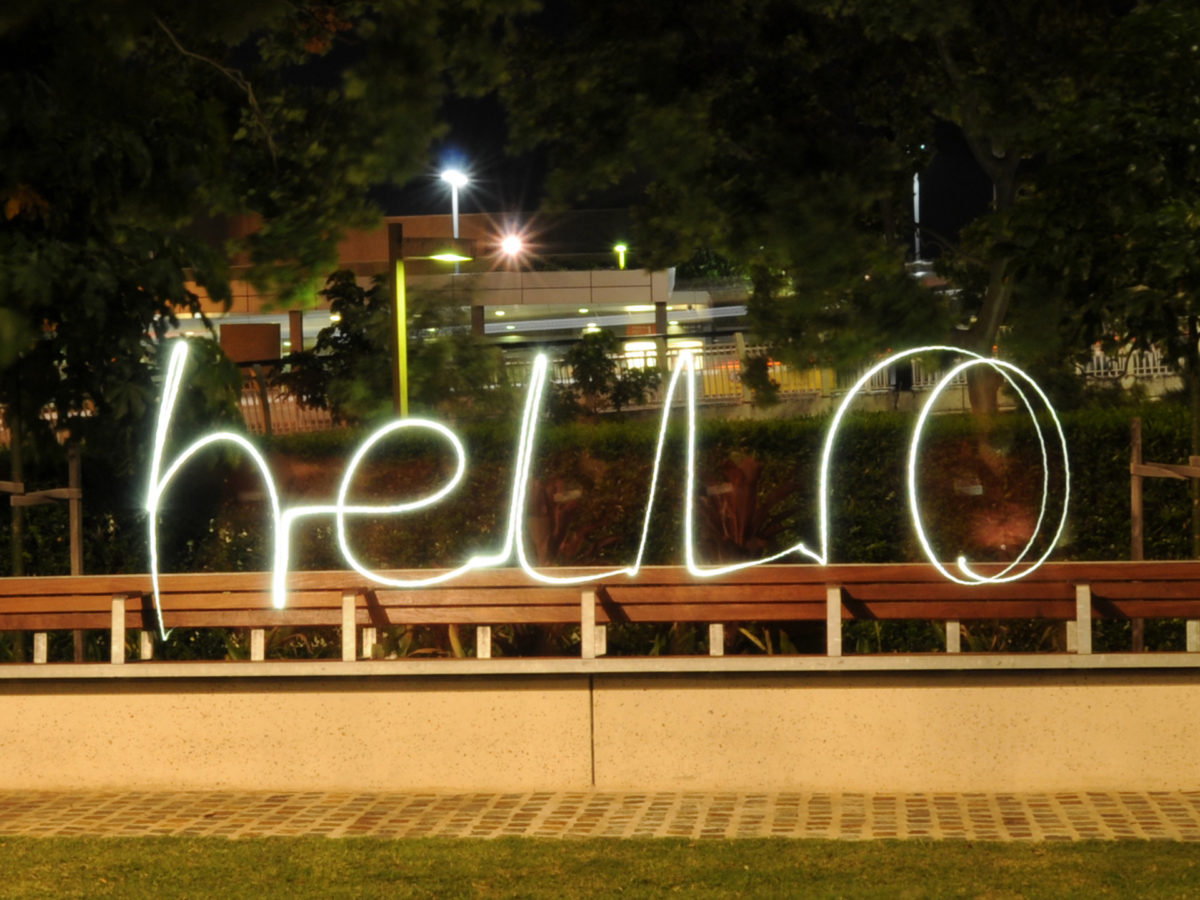
From there, it’s another short walk and we learn the rule of thirds, the rule of odds and why our brains, whether male or female, prefer asymmetrical photos of features like the Victoria Bridge. Then a few practical exercises in composition and juxtaposition – why some photos will always look far better than others. Then, some fun stuff – learning how to paint words and angel wings with light and to photograph the trails of lights from cars on the freeway, passing beneath the bridge we are standing on.
“I really love the teaching – being able to show people something and then to see their faces light up when they actually understand what is happening,” Catherine said.
“I like people to be able to experiment and try their own thing.”
“If I can get someone to understand everything that they personally, need to understand and then to get them to have some fun with it, like the light painting we did, then it’s a successful night…”
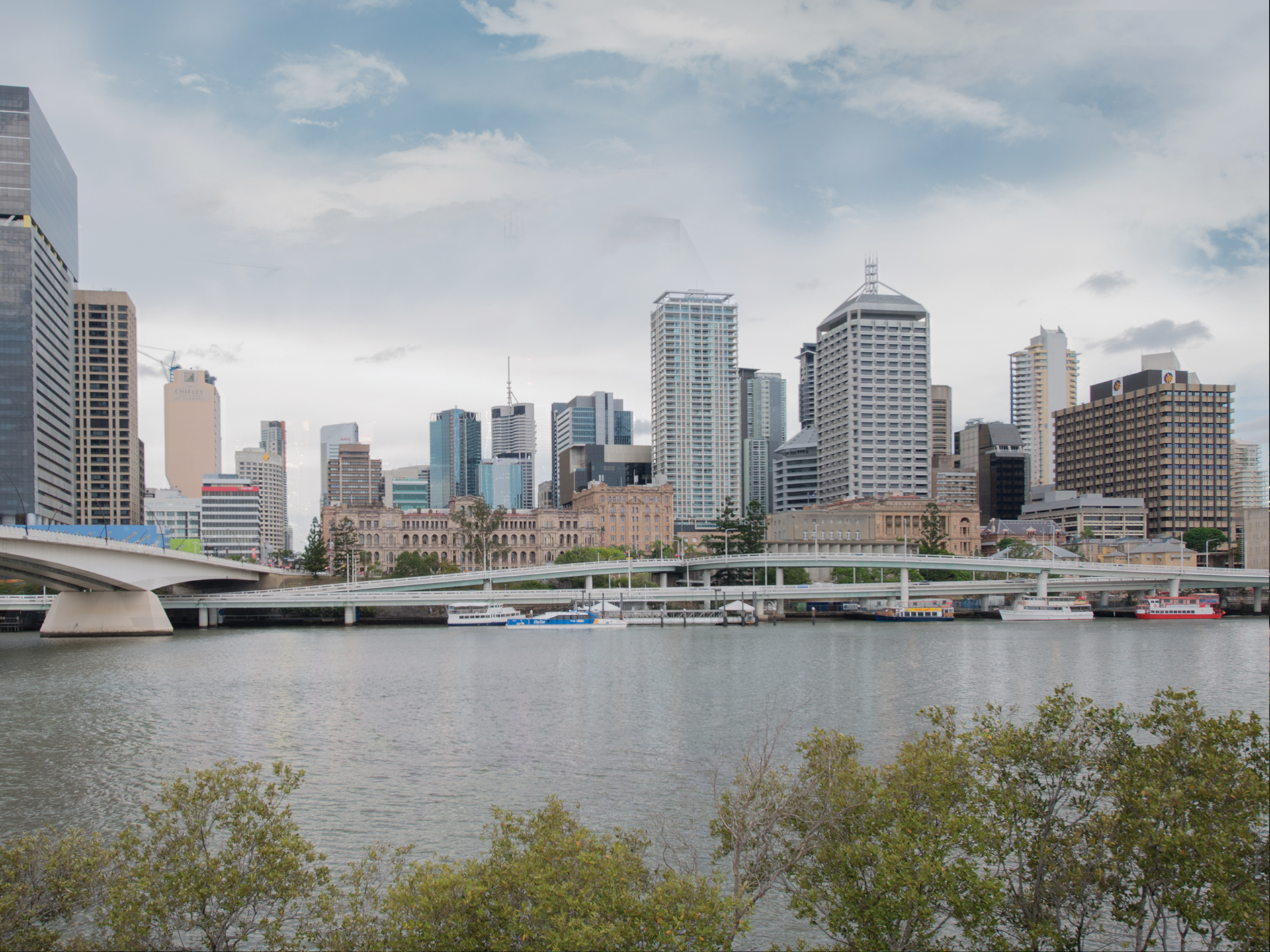
Brisbane City in the Daytime
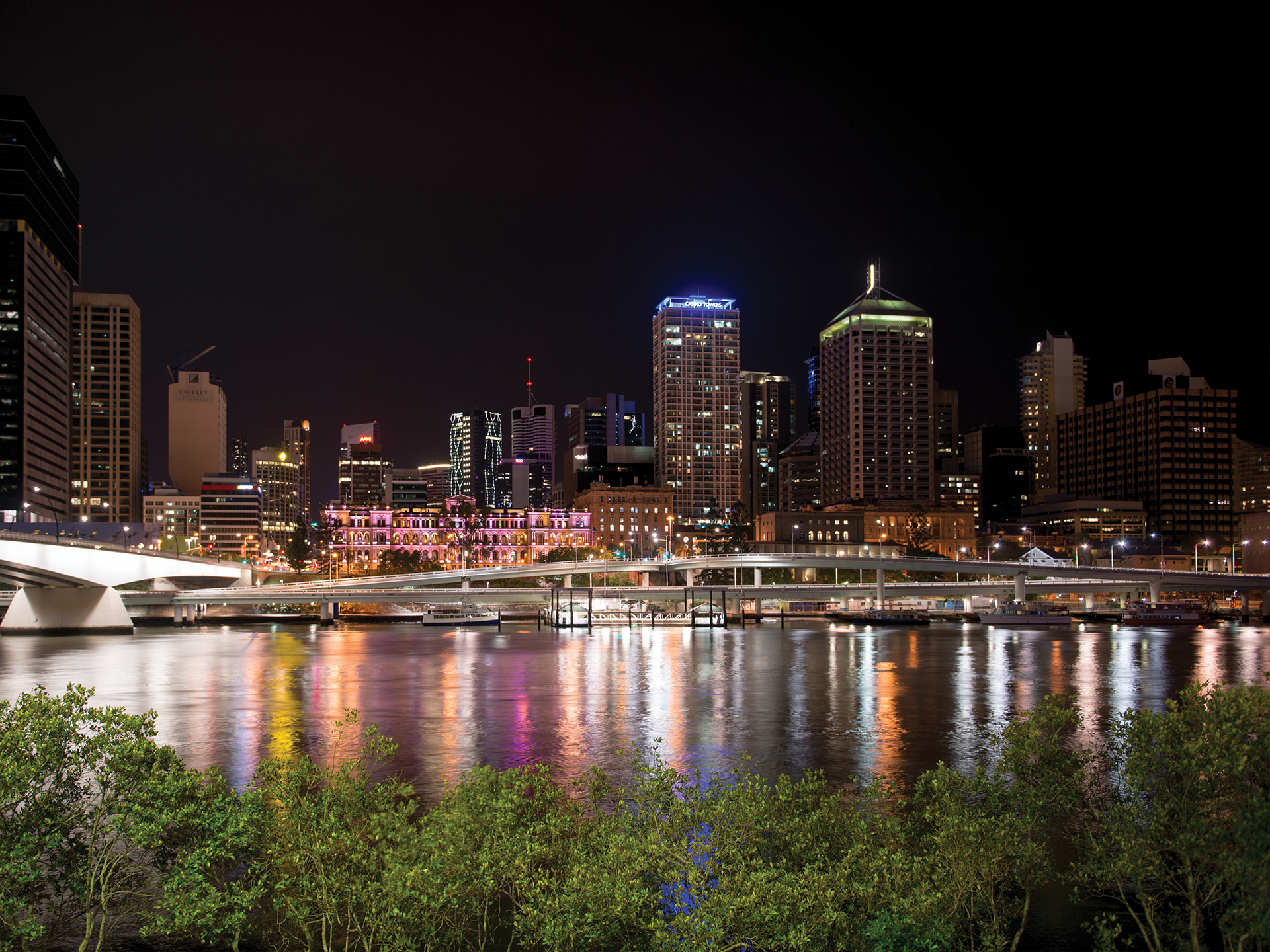
Brisbane City at Night