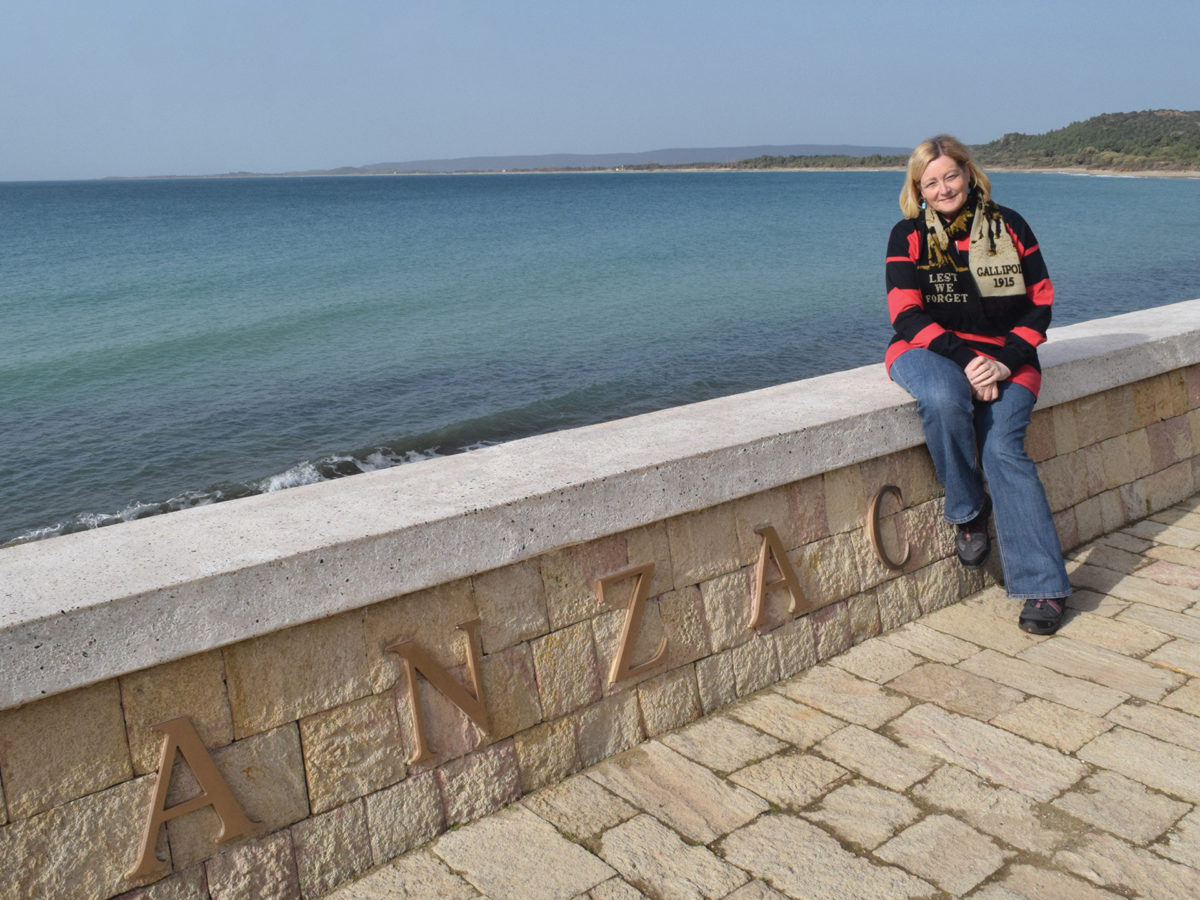
Catherine Heiner
‘Those heroes that shed their blood and lost their lives… You are now lying in the soil of a friendly country. Therefore rest in peace.’
‘Those heroes that shed their blood and lost their lives… You are now lying in the soil of a friendly country. Therefore rest in peace.’
‘Those heroes that shed their blood and lost their lives… You are now lying in the soil of a friendly country. Therefore rest in peace.’
‘Those heroes that shed their blood and lost their lives… You are now lying in the soil of a friendly country. Therefore rest in peace.’
‘Those heroes that shed their blood and lost their lives… You are now lying in the soil of a friendly country. Therefore rest in peace.’
Understanding this Historic Event
Understanding this Historic Event
Understanding this Historic Event
Understanding this Historic Event
Understanding this Historic Event
As I stood on the beach at ANZAC Cove and gazed up at the rugged cliffs, the tears welled in my eyes. I became overwhelmed. I said to my husband, “I never thought I would get here”. I was unable to control the strong emotions overcoming me. How could this place of serenity have been the site of such carnage and destruction?
My family and I have just returned from almost seven weeks travelling across the United Kingdom and Europe. The trip to Gallipoli was one of our last tours. When we mentioned to people that we were heading for Turkey and a tour of Gallipoli, many seemed perplexed that this would be part of our itinerary. London, Paris, Vienna, Salzburg, Venice, Florence, Rome, yes but Gallipoli? I guess people from other countries cannot imagine why this journey is almost seen as a pilgrimage. Australians feel a strong desire to see what this place is really like.
Having taught Secondary School History for over 30 years, I have frequently addressed the story of this battle from 100 years ago to my students. Whilst attempting to provide a balanced account of the story, I must admit, my students probably didn’t leave this unit of work without a feeling of pride in the role the ANZACs played in this battle, even though it was not a successful one in the end. We often hear that Australia’s involvement in this battle was a turning point in our national identity and our image overseas; the bravery, courage and ingenuity shown earned these “diggers” marks of respect and honour.
I guess my journey to Gallipoli provided the opportunity to see the battle from the Turkish point of view as well. Our tour guide from Hassle Free Tours, Ercan Yavuz, was a very knowledgeable academic who presented the facts and stories based on ten years of personal research and a genuine passion for the truth to be told.
Addressing us at the various memorial sites, Ercan presented scenarios which may have altered the course of the war. He mentioned that an Australian soldier had shot at and missed Mustafa Kamahl. The war and indeed the history of Turkey may have been quite different if this man had been killed in his early days of leading the Turkish army. He was later given the surname Ataturk (often said to mean “Father of the Turks”) when he united the Republic of Turkey and became its first leader.
In another scenario, Ercan surmised that had the Australians and New Zealanders landed on Brighton Beach instead of ANZAC Cove, there would have been even more carnage as there were many more Turks ready to attack there. Whilst the cliffs are rugged at ANZAC Cove and more than 2,000 men tragically lost their lives on that day, perhaps more would have lost their lives due to the stronger force and the open, less treacherous terrain off Brighton Beach.
Similarly, he pointed out that the victory of this battle by the Turks certainly provided the groundwork for the later War of Independence which resulted in Turkish Independence in 1923. The Turkish story may have been quite different if the Allies had been the victors instead. These numerous “what ifs” gave those in the tour group ideas to ponder.
The tour took us to notorious places like The Nek, Lone Pine and Chunuk Bair (secured at one stage by the New Zealand forces). We wandered through beautifully preserved cemeteries, which are looked after by the Commonwealth War Graves Commission. These cemeteries stand as a testament to the thousands of young lives lost on this battlefield. Of course, it was very difficult at the time to bury the dead in the midst of this extreme fighting. Many graves are marked, “Believed to have been buried at this site”, and lists of names adorn walls near commemorative pillars at one end of each site. Graves were often not marked or men were buried in mass graves instead.
Recent television documentaries are fascinating to watch as they tell the stories of the eight month battle to capture the peninsula and the Strait of the Dardanelles. I still find it remarkable that there was a nine hour truce on May 24, 1915. The troops from Australia, New Zealand and Turkey ventured into No Man’s Land to bury the dead from both sides of the battle as the rotting corpses were becoming a health hazard.
I am bewildered by the fact that the soldiers, who were now able to put a face to their enemy and who traded items in friendship, then headed back to their respective trenches to start the slaughter once more.
Those trenches were surprisingly close to each other with No Man’s Land sometimes measuring less than 10 metres apart. It was little wonder the troops could throw items (cigarettes as well as grenades) from one trench to the other side. Some of the trenches and the tunnels dug underground for surprise attacks on the enemy have been preserved or reconstructed for visitors to view.
The futility of the battle of the Nek and the indefensible loss of thousands of lives was also disconcerting. I cannot imagine how those men would have felt knowing they were about to rise out of the trenches to their immediate deaths. This battle even bemused the Turks who protested from their trenches requesting the Australians to stop sending more men forward.
The Turks lost thousands more men than the Allies and I guess I gained a greater respect for these fighters through the stories told by Ercan. I didn’t know what to expect from the Turkish people but we experienced such warmth wherever we went.
“Those heroes that shed their blood and lost their lives… You are now lying in the soil of a friendly country. Therefore rest in peace. There is no difference between the Johnnies and the Mehmets to us where they lie side by side now here in this country of ours… you, the mothers, who sent their sons from faraway countries wipe away your tears; your sons are now lying in our bosom and are in peace. After having lost their lives on this land they have become our sons as well.”
Ataturk’s message above from 1934 sums up the feelings of the Turkish people towards this burial place. It remains a sacred place for pilgrims to visit. There are signs requesting that people respect these places as cemeteries and refrain from having picnics, playing sports or damaging the area. It is free from development and infrastructure and thus signifies peace. The stark contrast between the tranquillity of Gallipoli’s shores and the bustling seaport of Çanakkale (pronounced chaa-nak-kaa-leh) is but a short ferry ride across the Dardanelles Strait.
As we view the dawn service being telecast from ANZAC Cove on April 25 this year, it will have a special significance to my family and to me. I imagine I shall be more overwhelmed than ever before as I recall this wonderful journey we took earlier this year. I am still not sure what the other members of our Gallipoli tour group (from Malaysia and France) would have thought of my tears back then, but I hope they gained some insight into the legendary Australian and New Zealand Army Corps.
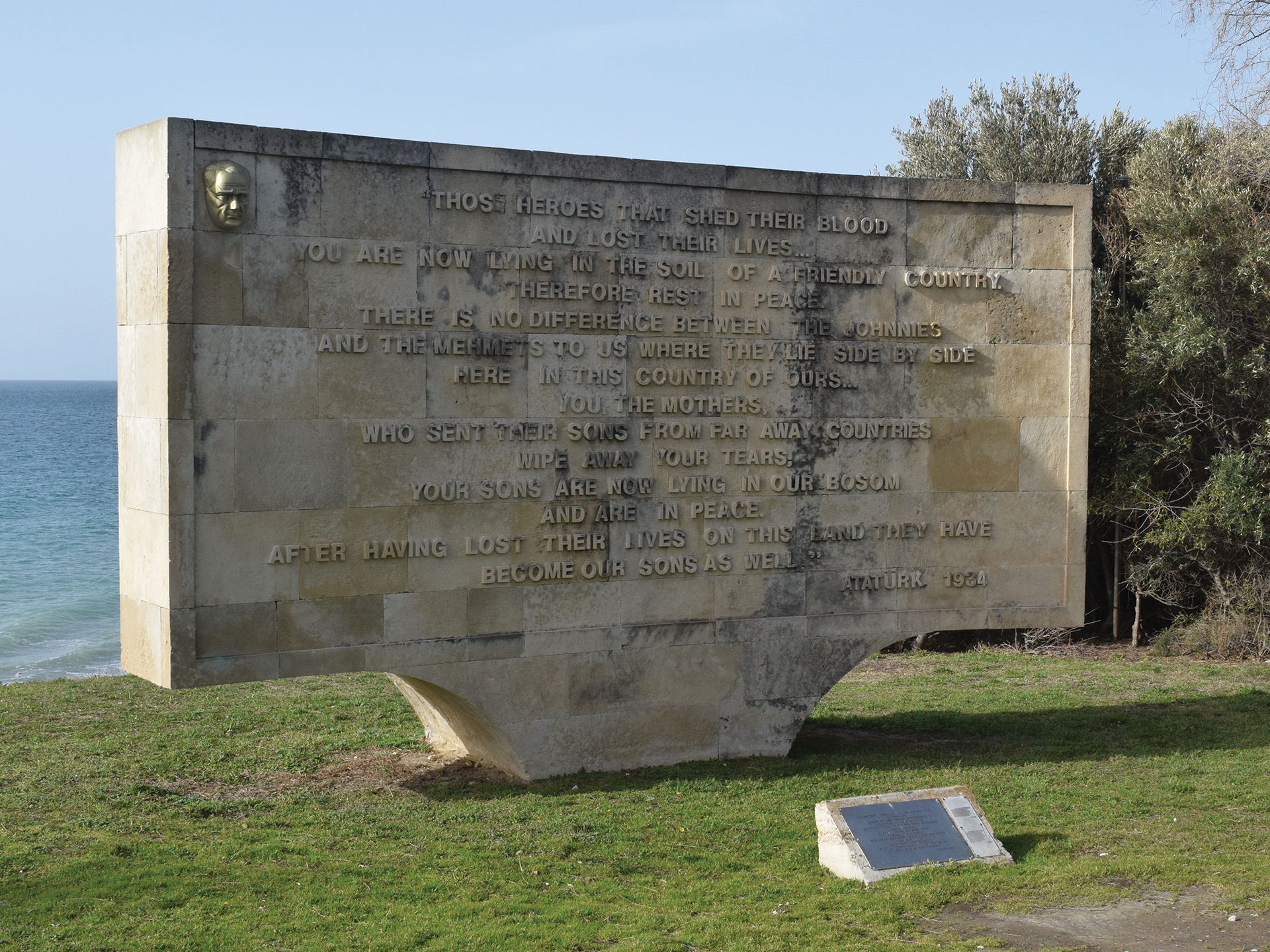
Ataturk Memorial Gallipoli