Dr Kathy Townsend
‘Manta Rays are the world’s largest rays, reaching a disc width of 7 metres for Manta birostris and 5 metres for Manta alfredi and are known as the gentle giants of the sea.’
‘Manta Rays are the world’s largest rays, reaching a disc width of 7 metres for Manta birostris and 5 metres for Manta alfredi and are known as the gentle giants of the sea.’
‘Manta Rays are the world’s largest rays, reaching a disc width of 7 metres for Manta birostris and 5 metres for Manta alfredi and are known as the gentle giants of the sea.’
‘Manta Rays are the world’s largest rays, reaching a disc width of 7 metres for Manta birostris and 5 metres for Manta alfredi and are known as the gentle giants of the sea.’
‘Manta Rays are the world’s largest rays, reaching a disc width of 7 metres for Manta birostris and 5 metres for Manta alfredi and are known as the gentle giants of the sea.’
Project Manta
Project Manta
Project Manta
Project Manta
Project Manta
Did you know that the “Manta Ray Research Team” that was featured on the ABC’s three-part documentary “Life on the Reef”? Established in 2007 and originating from The University of Queensland’s Moreton Bay Research Station, Project Manta is a multidisciplinary, scientific study of Manta Rays in Australian waters.
The primary aim of the project is to provide much needed biological and ecological information on these vulnerable species and their close relatives.
But what are Manta Rays and can they hurt you?
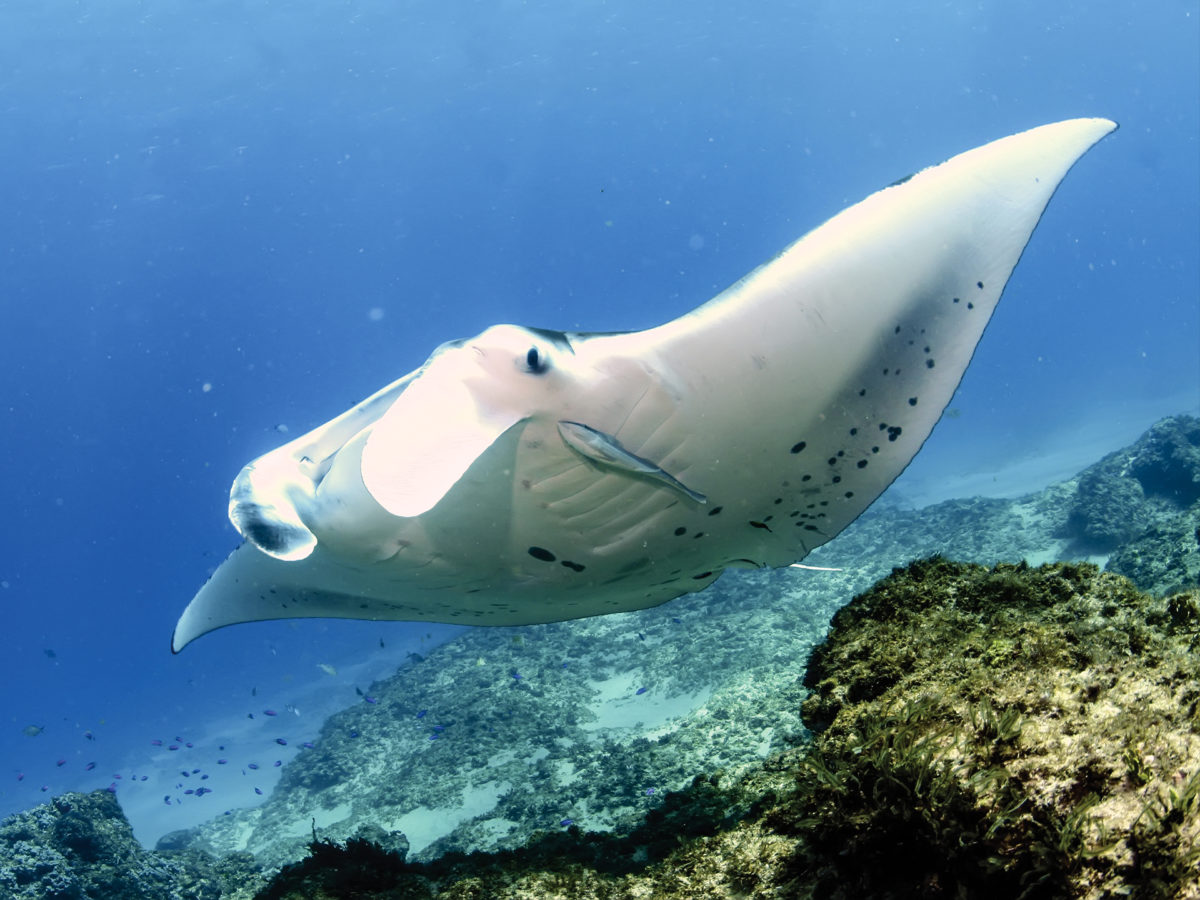
Manta Rays are the world’s largest rays, reaching a disc width of 7 metres for Manta birostris and 5 metres for Manta alfredi and are definitely gentle giants.
They feed on plankton, so they have very tiny teeth, more like a nail file than proper teeth. Manta Rays do not have a stinging barb like many other stingrays. Instead, they rely on speed for protection.
All of these factors, plus the fact they are very curious, makes them popular with scuba divers. People come from around the world to dive with the Manta Rays of Australia. Although Manta Rays are commonly observed during the summer months, very little was known about the East Australian population prior to this study.
This lack of information, needed to be addressed as a matter of urgency, as Manta Rays were being subjected to targeted fisheries around the world. They are caught for their meat, fins, liver and dried gills (used in the Traditional Chinese Medicine market to treat fever and viral infections, such as chicken pox).
Targeted fisheries for these species was spelt disaster for the Manta Rays, as population numbers were dropping worldwide. They are a long-lived species with late maturity and very low reproduction rates, similar to whales and dolphins. Because of these features, they cannot easily bounce back from fishing pressure.
It is not all bad news though. There have been some substantial conservation wins for Manta Rays in the last few years. Both species of Mantas (Manta birostris and Manta alfredi) are now protected at the international and Australian level. A huge win brought about by the collective efforts of the global Manta ray community.
Project Manta is considered to be a trailblazer in public participation via citizen science; utilising photographs and volunteer contributions from the recreational dive industry.
Each Manta ray has a unique spot pattern on its belly that can be used to identify individuals from one another. Project Manta currently has over 850 individual Manta Rays in our database, and it is growing each year due to the collective efforts of a multitude of citizen scientists.
The “Life on the Reef” documentary highlighted the citizen science input and the importance of social media to Project Manta, as our Facebook members regularly contribute photographs and sightings for the project. After the documentary went to air, new followers uploaded many images that led to new individuals and locations being identified.
Age of the animals is not the only of the information we gain about Manta Rays from citizen scientists. A recent paper, highlighting the first confirmed sighting of the giant Manta ray (Manta birostris) on the east coast of Australia, was only possible due to a photograph shared with us by a keen-eyed citizen scientist.
Initially concentrating on the East Coast of Australia, Project Manta has recently secured philanthropic funding from Austral Fisheries and TG Holdings, to expand into a national project.
We have recently joined forces with Frazer McGregor from Murdoch University, a Manta Ray expert from Coral Bay in Western Australia. He brings with him a database of over 750 individuals he has identified. As our two databases were generated separately, we are now undergoing the process of cross-referencing species from both sides of the country. An exciting time for Project Manta.
A project that was born and grown within Australia, has extended its global influence.
Research sponsored by a local philanthropist through the Goodman Foundation, has found that Manta ray tissue, despite being sold as a health product overseas, is actually bad for your health. Levels of cadmium, arsenic and lead were found to be at or above maximum levels recommended by international health organisations. This information should further discourage global trade in Manta Ray products.
Project Manta is a perfect example of the power of the old saying “Think globally and act locally.”
For more information and to keep up to date with the latest Manta Ray news, follow Project Manta and Project Manta WA on Facebook.
If you have photos you would like to share, please email them to project.Manta@uq.edu.au …