John Daffy
‘You don’t need a million-dollar floating palace loaded with tens of thousands worth of fishing gear to catch them.’
‘You don’t need a million-dollar floating palace loaded with tens of thousands worth of fishing gear to catch them.’
‘You don’t need a million-dollar floating palace loaded with tens of thousands worth of fishing gear to catch them.’
‘You don’t need a million-dollar floating palace loaded with tens of thousands worth of fishing gear to catch them.’
‘You don’t need a million-dollar floating palace loaded with tens of thousands worth of fishing gear to catch them.’
Champagne Fishing
Champagne Fishing
Champagne Fishing
Champagne Fishing
Champagne Fishing
If the best story ever told about marlin and dolphin fish is Ernest Hemingway’s “The Old Man and the Sea”, then surely the second best is the one continuing to be written about the nearby waters off the east coast of Australia.
For while the weather-beaten and gnarled Cuban fisherman, Santiago staged an epic marlin hunt after having failed 84 days in a row to catch a fish of any note, our local offshore waters are continuing to spoil us nearly every day in the warmer months, with abundant black marlin, dolphin fish, wahoo and yellowfin tuna, among other species.
Champagne fishing on a beer budget.
To more accurately reflect one of the concoctions invented by the famed imbiber, Mr Hemingway himself, “One jigger of absinthe into a champagne glass, add iced champagne until it attains the proper opalescent milkiness and then drink three to five of these slowly”.
Summer is the time these deliciously sporting speedsters migrate in numbers to our local waters.
You don’t need a million-dollar floating palace loaded with tens of thousands worth of fishing gear to catch them.
In the right conditions, a seaworthy vessel of around six metres (some go smaller) and an overhead reel with a lever drag action and a rod of just under two metres purchased new as a combo for less than $200, will be enough to bring in piscatorial predators like those pictured here.
These fishing outfits will be typically rated between 8kg and 15kg – your favourite tackle retailer can demonstrate the differences.
We could fill hundreds of pages listing the various equipment and gear, but the bottom line is that these fish are so prolific over summer, that even a ‘first-timer’ has a pretty good chance of hooking on to something very impressive.
The key (as a now-departed great mate of mine used to say), is to understand that ‘memories live longer than dreams’. Summer is the time to get out there and create some of those memories.
So, here’s a suggested, simplified plan of attack for first-timers:
You don’t need to go over the horizon to find great fish in the pelagic window that in general terms, extends from December through to perhaps April, with January and February being prime months.
Study a chart and use your sounder to start trolling on the 50-metre contour. Look for schools of bait fish, preferably bundled in the middle of the water column (that’s the vertical space between your boat and sea floor).
If you are not getting any joy, vary the plan while having due regard to restricted areas such as Green Zones. Troll closer to reef areas, troll further away, troll shallower waters, troll deeper waters and above all, watch for any “differences” because differences increase your chances.
A darker blue edge along the water can denote a different current line as can a line of weed or ‘gunge’; birds working also is a difference – they’re swooping on bait fish being attacked; a noticeable change in water temperature; water that just looks a little different – all good places to explore new options.
Troll an assortment of lures at a variety of distances behind your vessel – while they have various positional names such as short corner, long corner, short rigger, long rigger and shotgun, the key is to position the trolled lures, so they are running just in front of the different wake waves created by your boat.
That way they should create bubble trails (also called smoke trails among other names) which will attract attention. You can also tow a ‘teaser’ closer to the boat – that’s a device that will create a bubble and splash trail simulating a school of bait, or small fish being put under stress.
The distances they are towed from the back of your boat might range from just a couple of metres to perhaps 25 metres. If they occasionally break the surface, that’s fine, but you don’t want them cartwheeling through the air.
Speeds between 6 knots and 8 knots are a good starting point.
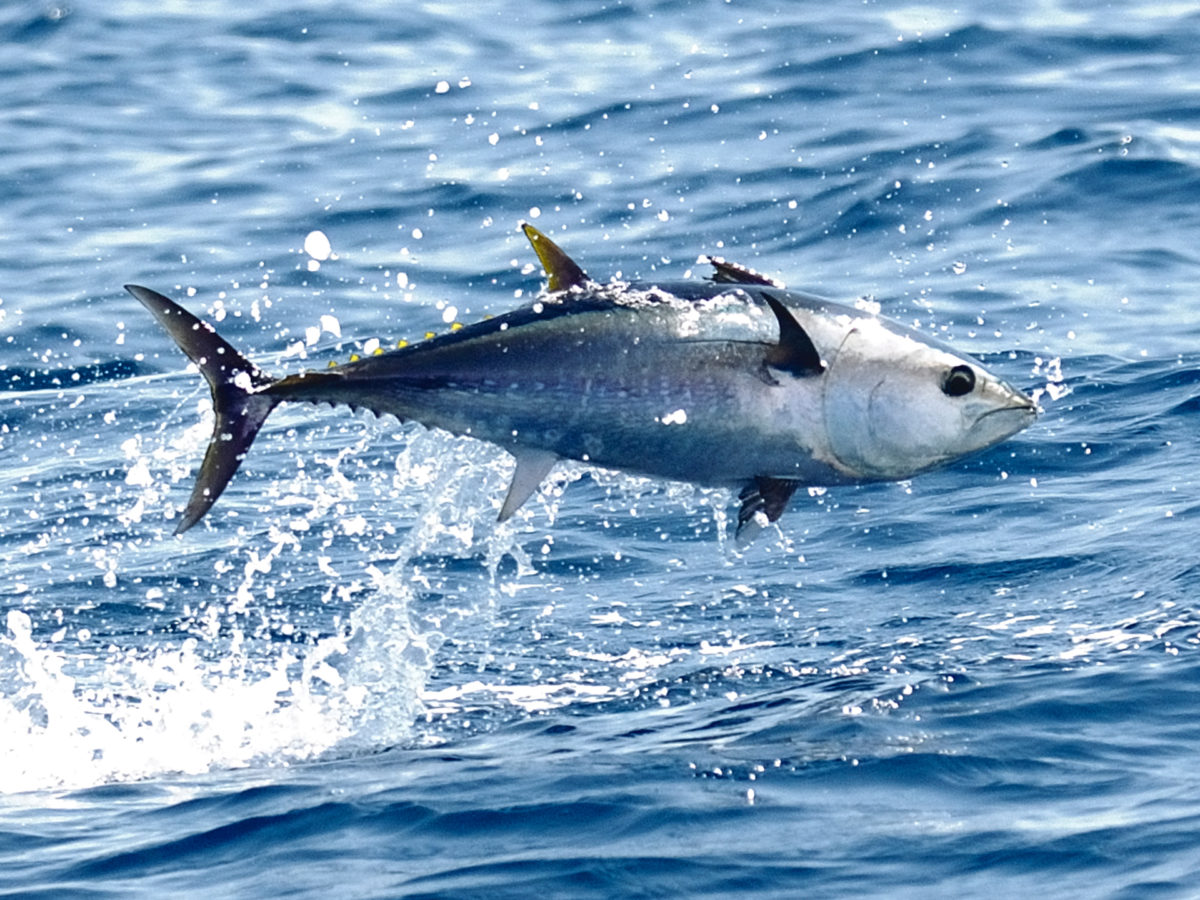
Even more good news is that locally, juvenile black marlin (from perhaps 18 to 35kg), dolphin fish (also known as Mahi Mahi and dorado), yellow fin tuna, wahoo and other species, including mackerel, are all happy to have a crack at the same types of lures.
However, if you are winding in lures that look like shaving brushes, it’s time to switch to a wire leader because it probably means the toothy critters like ‘hoo and mackerel are on the bite.
Early morning is a great time to catch them, the later afternoon is a great time, the middle of the day is a great time, a tidal change is a great time, a few days before the full moon fishing in the afternoon is a good time, a few days after the new moon in the morning is a good time, just before a significant change in barometric pressure is a good time, when you should be mowing the lawns at home is a good time… you get the picture…
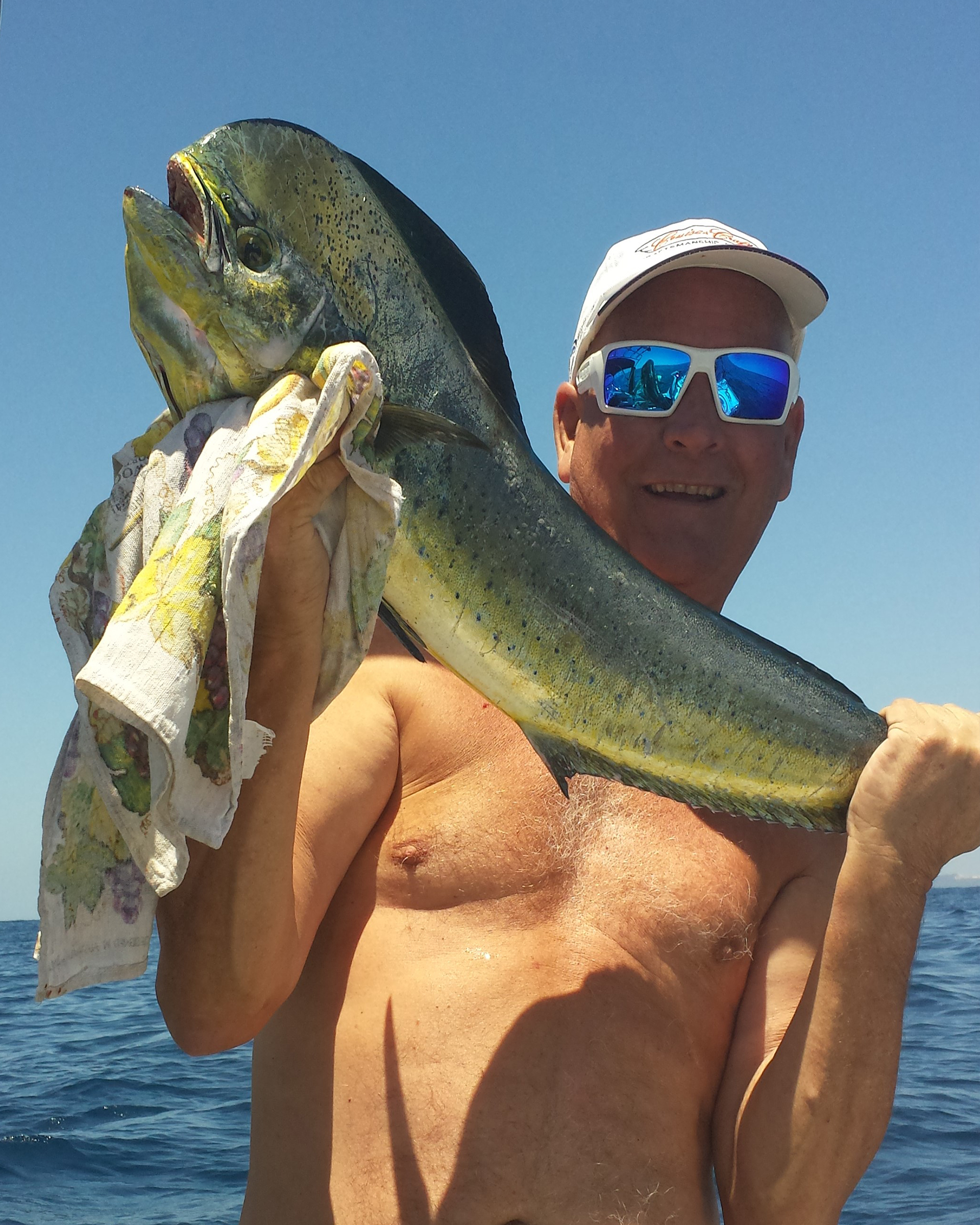
Mahi Mahi with John Daffy
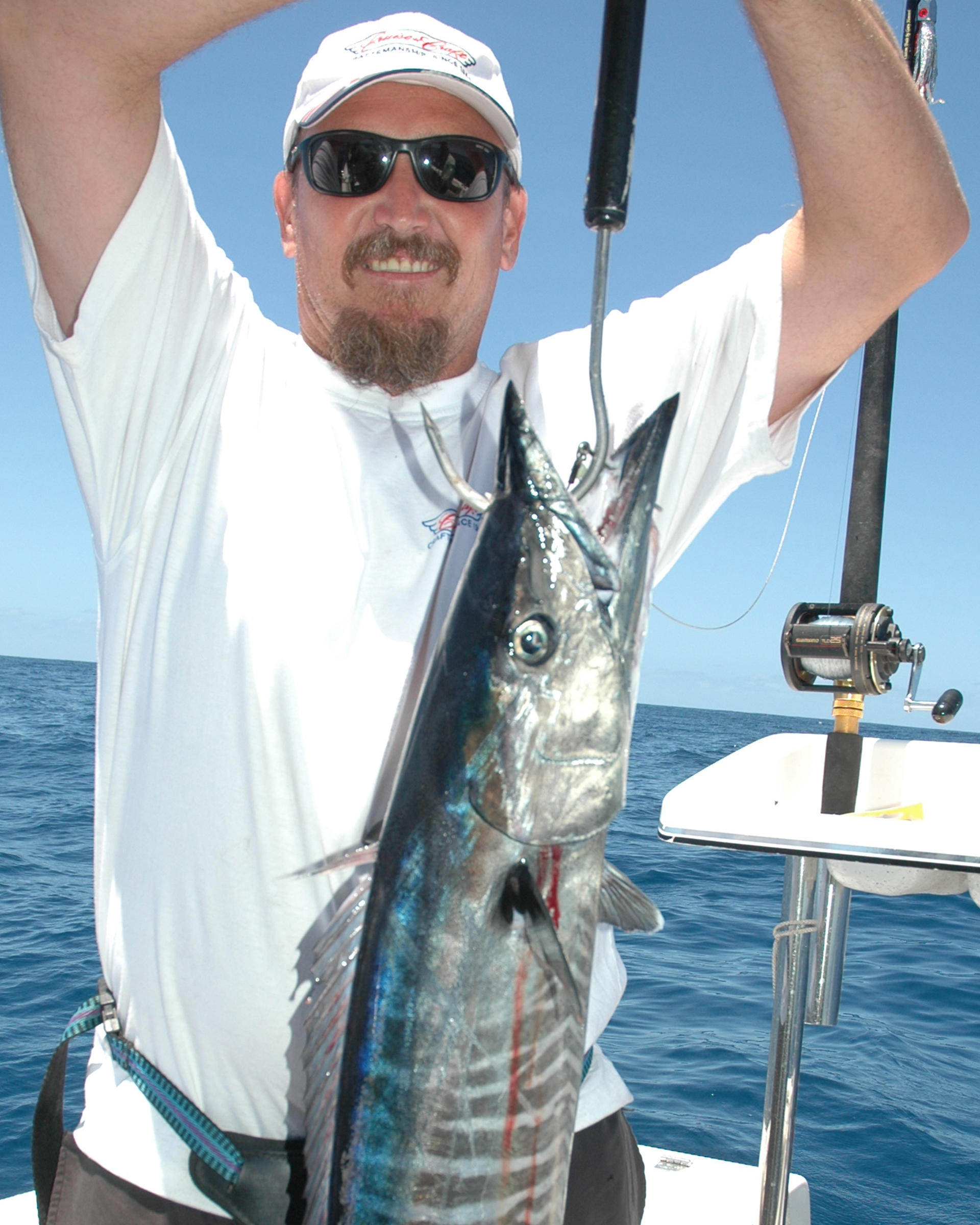
Wahoo with Richard Love
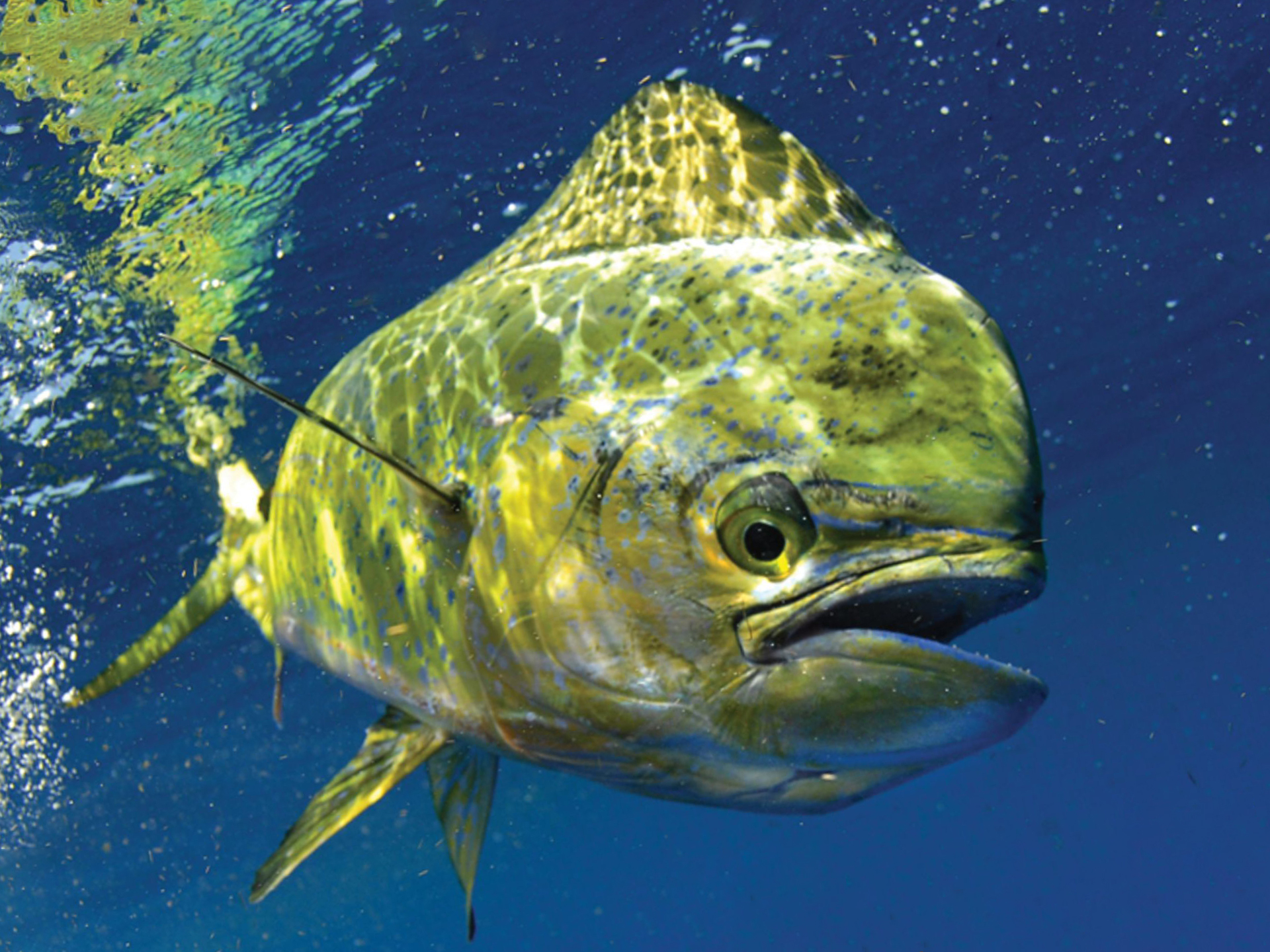
Mahi Mahi
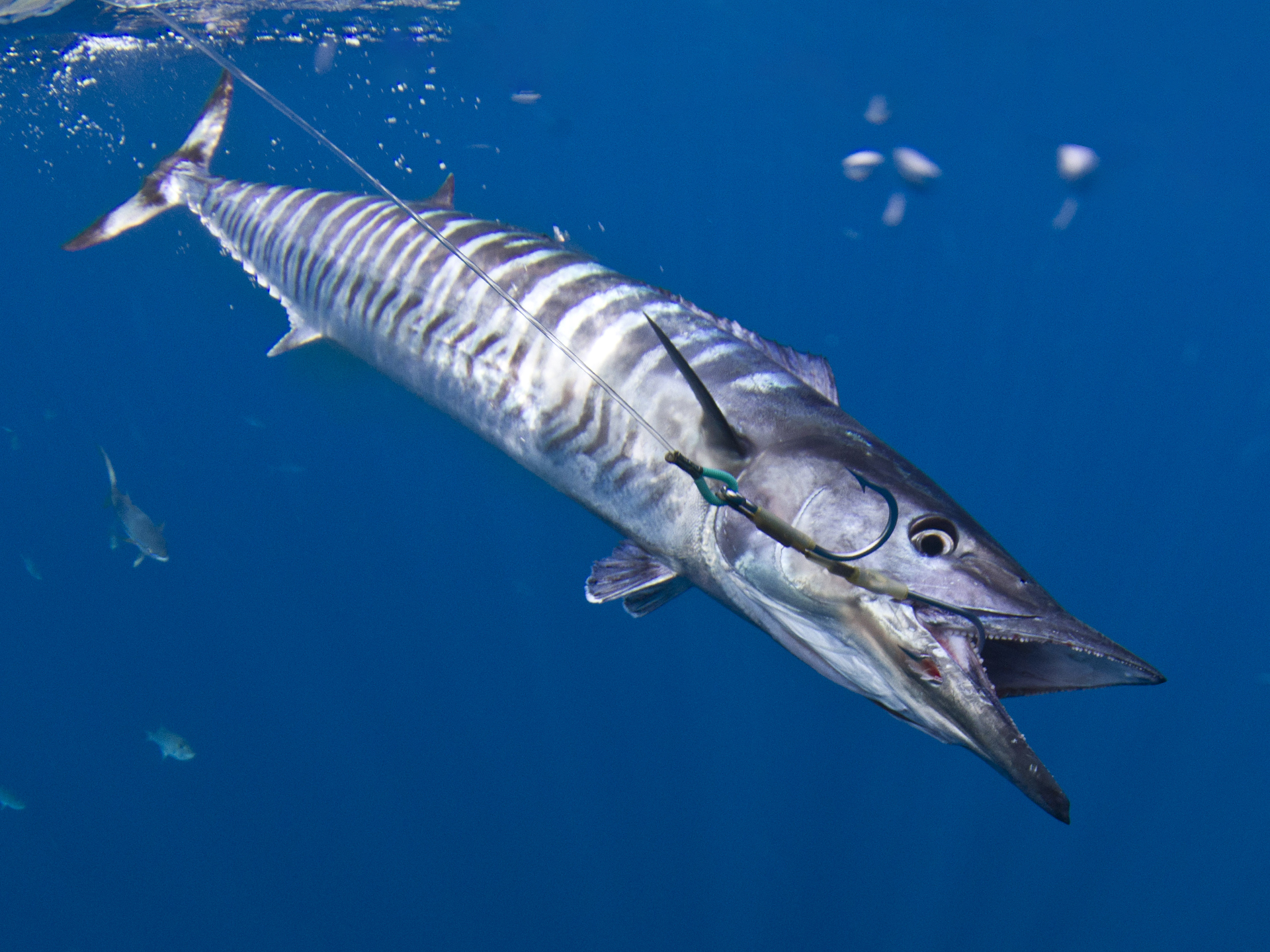
Wahoo
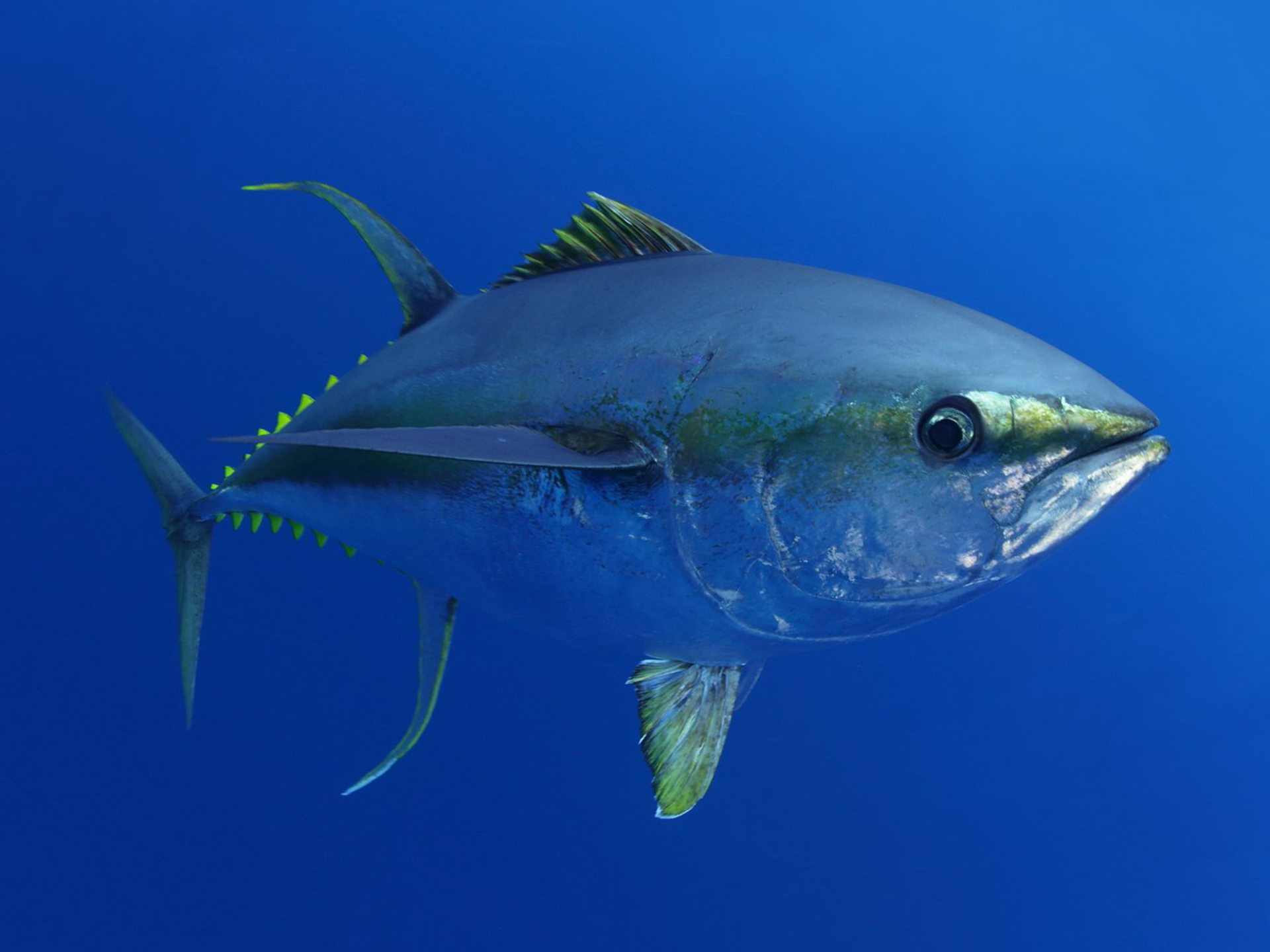
Yellowfin Tuna