Daniel Bunker
‘During World War 2, crews flew a continuously for 5,600 kilometres, from Perth to the South of Ceylon, across enemy territory and in a defenceless Catalina flying boat.’
‘During World War 2, crews flew a continuously for 5,600 kilometres, from Perth to the South of Ceylon, across enemy territory and in a defenceless Catalina flying boat.’
‘During World War 2, crews flew a continuously for 5,600 kilometres, from Perth to the South of Ceylon, across enemy territory and in a defenceless Catalina flying boat.’
‘During World War 2, crews flew a continuously for 5,600 kilometres, from Perth to the South of Ceylon, across enemy territory and in a defenceless Catalina flying boat.’
‘During World War 2, crews flew a continuously for 5,600 kilometres, from Perth to the South of Ceylon, across enemy territory and in a defenceless Catalina flying boat.’
Double Sunrise Flights
Double Sunrise Flights
Double Sunrise Flights
Double Sunrise Flights
Double Sunrise Flights
In February of 1942, the vital Empire air route which connected Australia to England, lay in ruins after the fall of Singapore. Australia became isolated and desperately needed the air route re-established for top secret wartime communications and VIP’s traveling between the two countries. The only feasible air route at the time was a non-stop flight for up to 32 hours from the Swan River in Perth to Lake Koggala in the South of Ceylon.
With the first service commencing on July 10, 1943, crews flew a continuous distance of 5,600 kilometres across enemy held territory, all in a defenceless Catalina flying boat.
Upon arrival the passengers received a certificate of membership to “The Rare and Secret Order of the Double Sunrise”, to recognise that they had been airborne for more than 24 consecutive hours of which they had seen the sun rise twice during their flight. The Catalinas carried VIP passengers and top-secret cargo from Britain and Australia and many of these flights would have flown through Redland Bay which at the time was the home of a flying boat base for Qantas which operated the top-secret flights under the RAAF.
In modifying Catalinas to travel the distance, engineers had to remove all nonessential items from the aircraft, including all creature comforts and armour plating. Extra fuel tanks were then installed in the rear of the aircraft adding the equivalent of two passenger cars in total weight to the aircraft. In fact, the Catalinas were so overloaded with fuel, that if an engine failed within the first 10 hours of flight, the aircraft would have crashed into the sea. In total, 271 crossings were made across the Indian Ocean without any loss of life. A total of 858 passengers and 100 tonnes of war priority cargo had been flown over 2 million kilometres, across enemy territory, unarmed and without support, feats still regarded today as some of the bravest in aviation history. As a direct result of these flights, the crews hold the record for the longest non-stop commercial flight of 32 hours and 9 minutes, a record that still stands today.
Yet, despite these brave efforts, the Australian Government refused to recognise the crews after the war, a sad end to these brave and courageous heroes, until now…
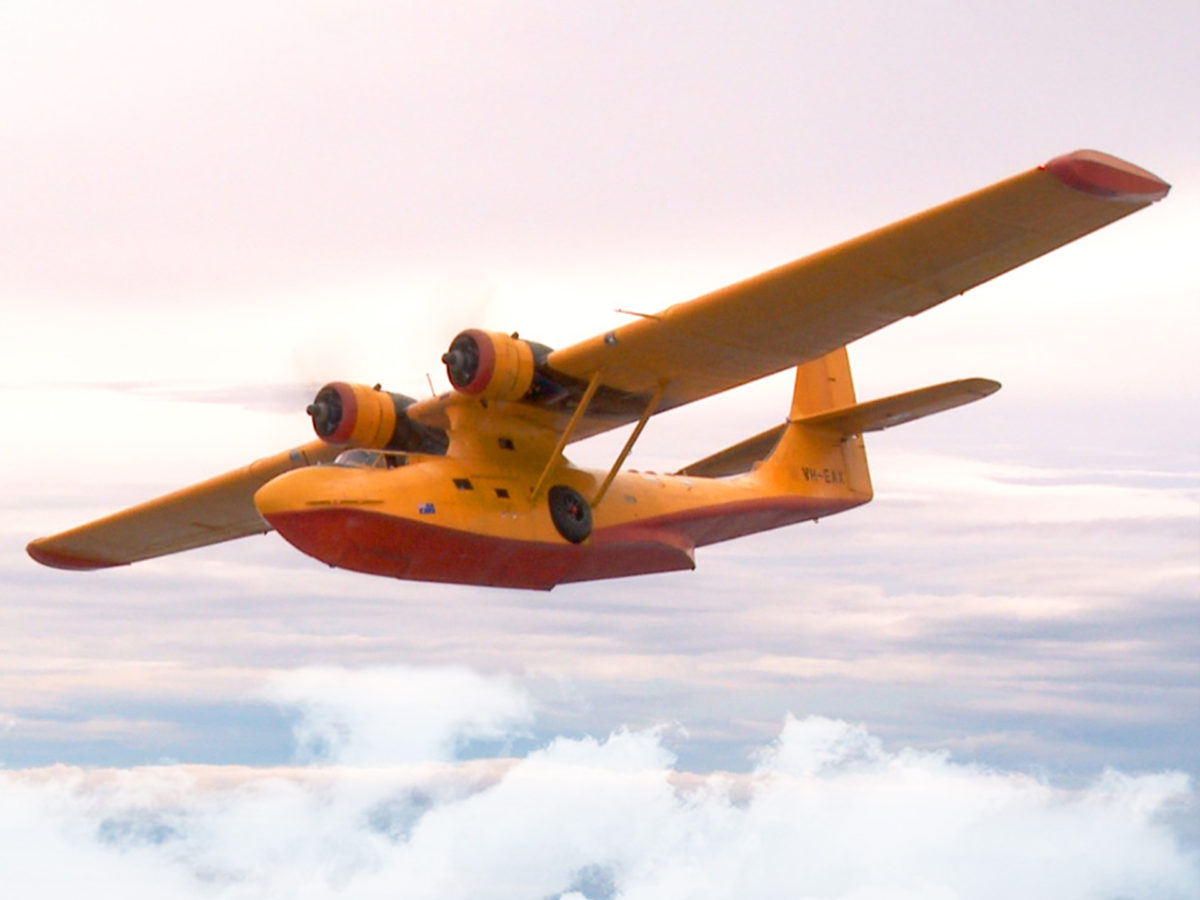
The Qantas Founders Museum in Outback Australia has changed all of this by restoring and flying a seventy-year old Catalina flying boat half way across the world from Spain to Longreach. They started this journey in 2009 when a group of passionate volunteers travelled to Spain to restore this mighty Catalina. They spent nearly four months working on the aircraft in Spain’s blistering Mediterranean heat. Once work had been completed, this crew of brave Australian aviators flew the aircraft through the Middle East, India and onto Thailand where the aircraft experienced a catastrophic engine failure. This effectively ground the project to a halt and the crew had to pack up and head home.
In 2011, I was asked, by the Chairman of the Museum, to film a documentary about the museum’s second attempt at bringing this historic aircraft home to Longreach. So, in late 2011, I flew to Thailand and filmed the crew’s successful recovery of the Catalina and travelled with them on an epic journey across South East Asia, all the way back to Longreach, to be met by Rex Senior, the last remaining pilot from the Double Sunrise Flights.
One of the funniest experiences of the flight was refuelling in Bali, where we were met by about ten refuellers, who had to hand pump the fuel out of 18-gallon drums into the Catalina. However, the local ground crew were so bored at this tiring process that they resorted to playing disco music to motivate themselves, dancing and hand pumping fuel at the same time! It was hilarious and something you would never see in Australia.
The scariest moment was when we experienced engine issues mid-flight between Malaysia and Indonesia. We were a long way from help and the right engine spluttering excessively. As the crew were busily trying to fix the issue, I thought “heck if we’re going down, I may as well capture it!” Thankfully the crew found a solution by pumping fuel into the right-hand engine and later that day, arrived safely in Surabaya, Indonesia.
My fondest memory, would have to be filming with Rex Senior the last remaining pilot of the “Double Sunrise Flights” at his home in Adelaide. It was so inspiring talking with him and he gave me such great advice about life which really impacted me deeply. He said three things “Trust in Jesus, learn from your mistakes, and accept that life will be difficult sometimes.” When we arrived in Longreach, we flew Rex Senior up to greet the crew.
Seeing the look of amazement on his face made the whole film and journey worth it. Soon after Rex Senior passed away and the film has since been dedicated to his memory. Since then, I have edited this epic adventure into a feature length documentary called the Return of the Catalina, which was released around the world in late 2015. Finally, these unsung heroes will now be remembered as a vital part of our nation’s wartime history.
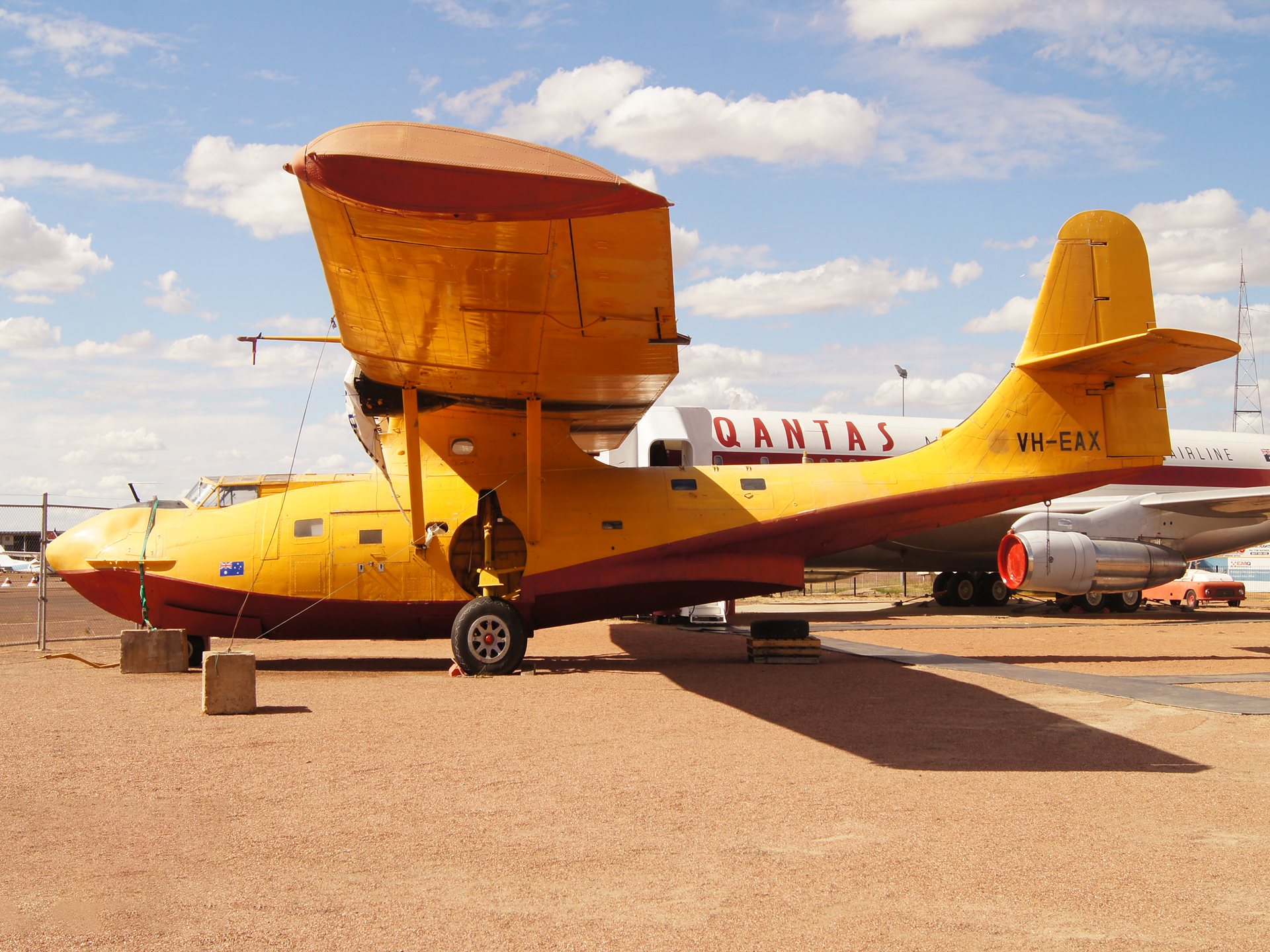
Catalina VH-EAX at QANTAS Founders Museum
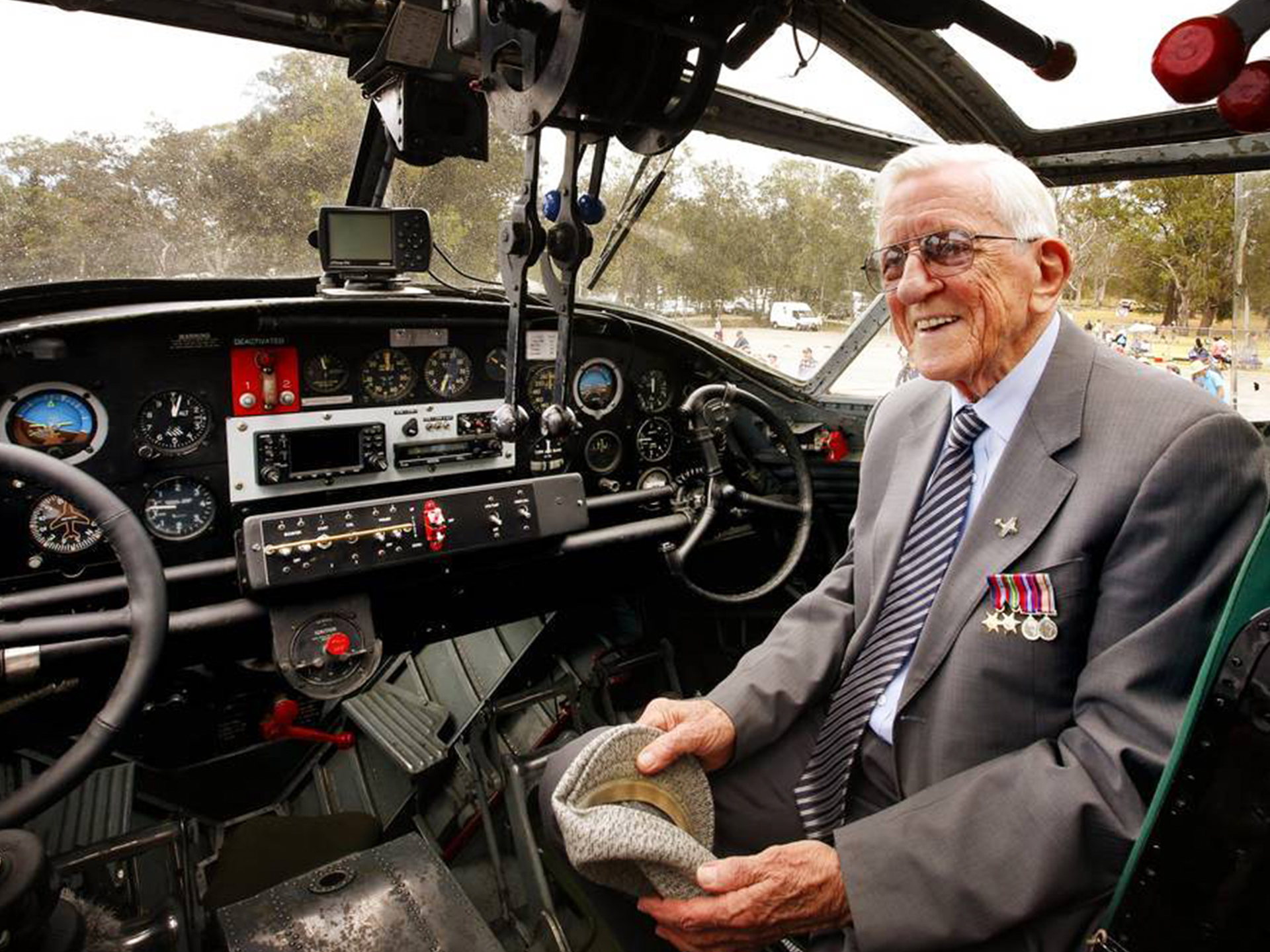
Catalina Radio Operator, Dick Udy
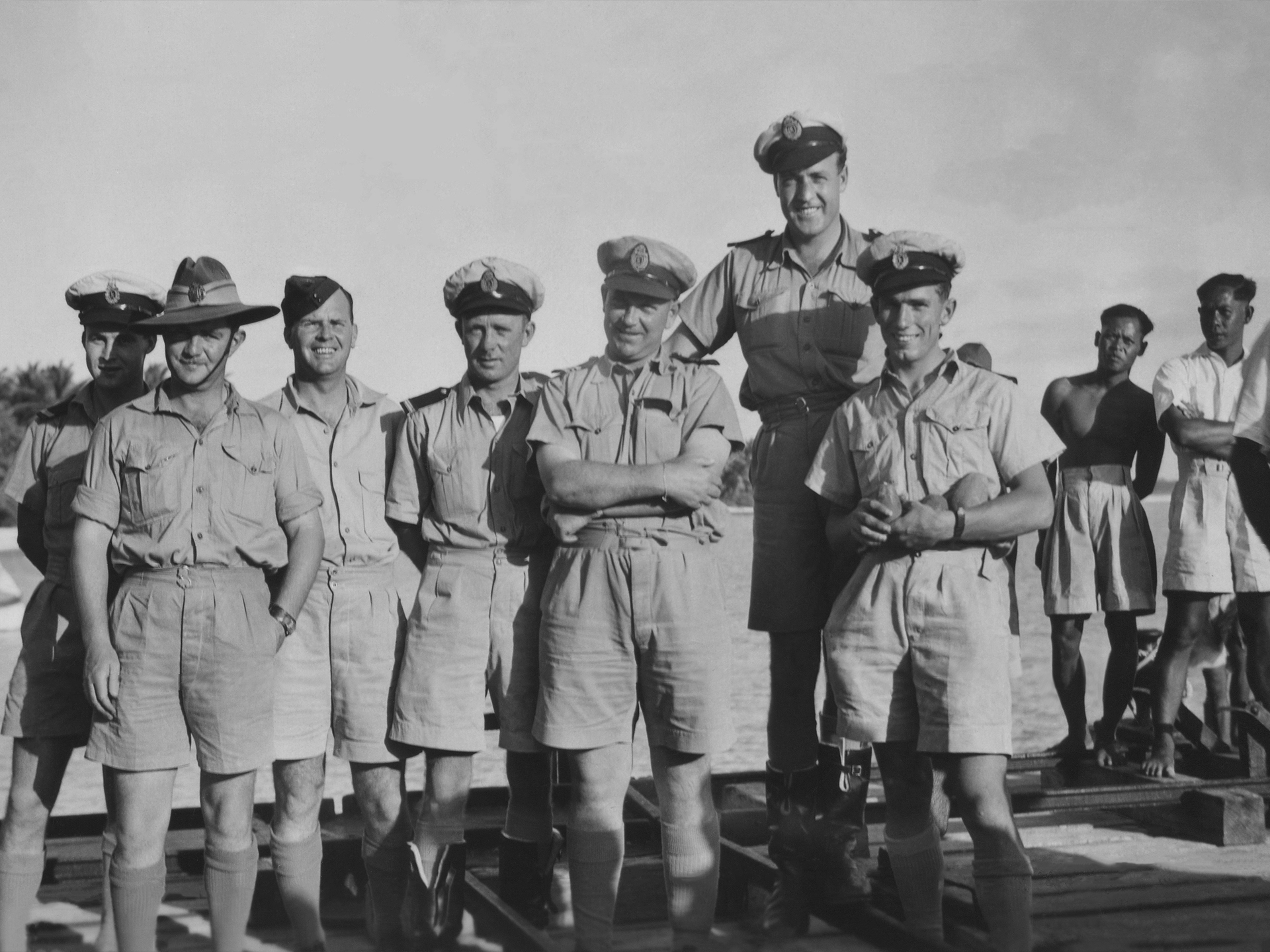
Catalina Crews